

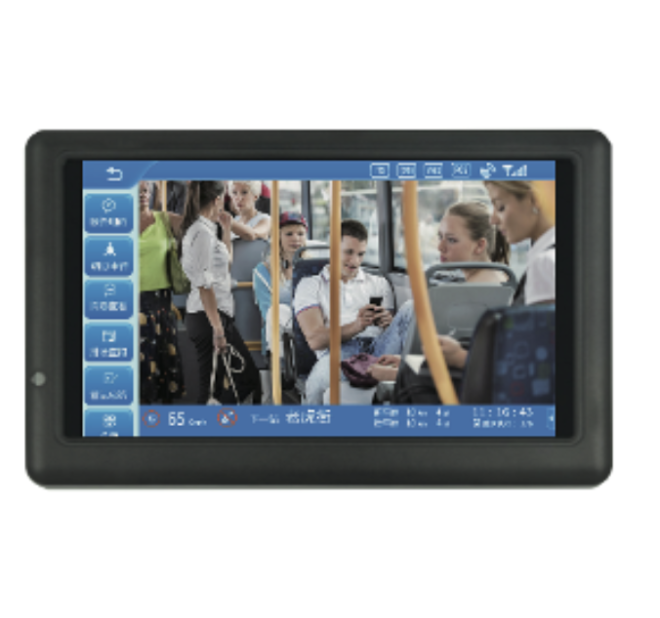
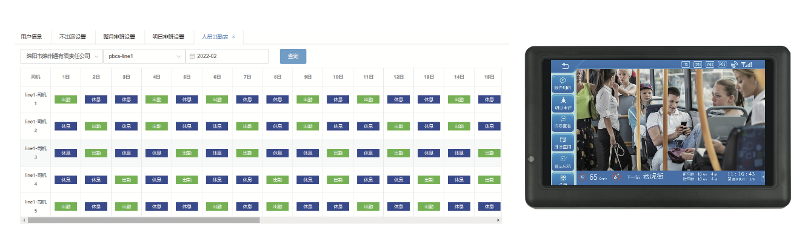
Golong intelligent on-board terminal integrates GPS/Beidou positioning, driver identification, alarm function, camera monitoring, and other functions to effectively solve the problems of the taxi industry and ensure operational safety. It can accurately identify the driver’s identity, record the travel and mileage in real time, prevent the driver from detouring, and provide passengers with the most accurate and detailed driving information. There is video surveillance in taxis. Operation information can be synchronized to the management system in real time. Furthermore, taxi dispatching is more convenient, and operational efficiency is significantly improved. At the same time, passengers’ safety can be ensured.
1.Black boxes in taxis can realize 24-hour recording of vehicle trajectory.
The on-board GPS terminal has remote monitoring, an emergency alarm, and a driving record. In addition, it meets the 794 standard. At the same time, it also has high-efficiency video coding and other functions.
2.Accurate positioning can know where the taxi is in real time.
The high-sensitivity GPS chipset is used to synchronously receive the satellite signal and its base station signal so that the vehicle position can be located more quickly and accurately. There is no blind angle. Combined with the monitoring platform, staff can view real-time location information and current taxi status information at any time.
3.Emergency alarms can realize timely control of hazards.
The on-board intelligent terminal can be connected to the SOS button. In an emergency, the terminal can ask for help from the preset SOS number and send a location SMS. Combined with remote power-off control, it can reduce the danger at the first time and minimize the risk.