

As passenger travel needs become increasingly personalized and diverse, the fixed-route and fixed-schedule model of traditional public transit can no longer keep pace. Demand-Responsive Transit (DRT), offering high accessibility and flexibility, has emerged as a new frontier for public transportation modernization. As a leading provider of transit fare aggregation systems, Golong Technology is deeply committed to AI-powered dispatching and DRT solutions. Backed by cutting-edge technologies, we have successfully deployed our projects across multiple cities.
Peak Fixed, Off-Peak On-Demand
This innovative model utilizes fixed schedules during rush hours and switches to on-demand dispatching during off-peak times, effectively solving the problem of inefficient capacity allocation. It guarantees efficient commuting during morning and evening peaks while dynamically dispatching vehicles during off-peak periods to minimize empty runs. Services are accessible via mobile apps and offline smart kiosks, ensuring inclusivity for all age groups. This model has successfully upgraded the “Cloud Bus” systems in Hangzhou and Changzhou.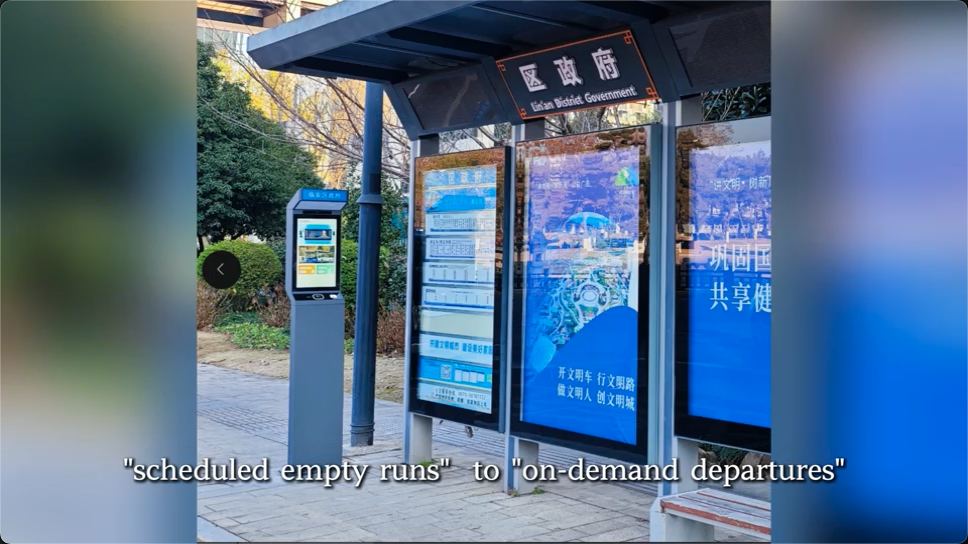
Neighborhood Demand-Responsive Bus
Launched in the Lingang area of Shanghai in October 2025*, this model features fixed stops with flexible routes, utilizing a single-loop, on-demand operation that seamlessly connects communities with the main transit network. Smart booking kiosks are installed at stations to support both online and offline reservations, significantly enhancing regional connectivity and the overall resident travel experience.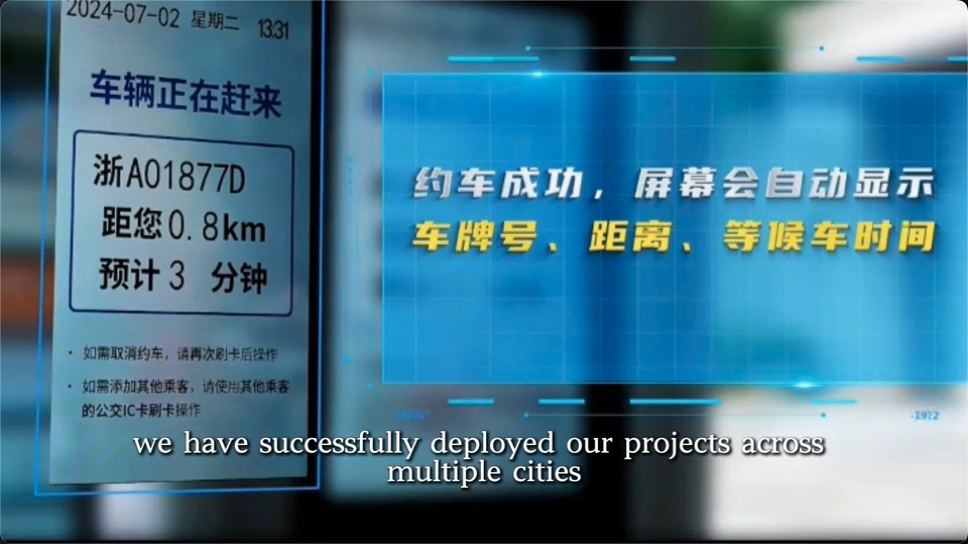
Zone-Based DRT (Wenzhou)
Covering a service area of approximately 9.1 square kilometers with 158 stops, the system intelligently plans optimal routes, capping one-way travel time at 25 minutes. This translates to an efficiency increase of over 40% compared to conventional buses. It offers three core advantages: dynamic ride-pooling, 15-minute precise booking, and live vehicle tracking, delivering a highly convenient travel experience.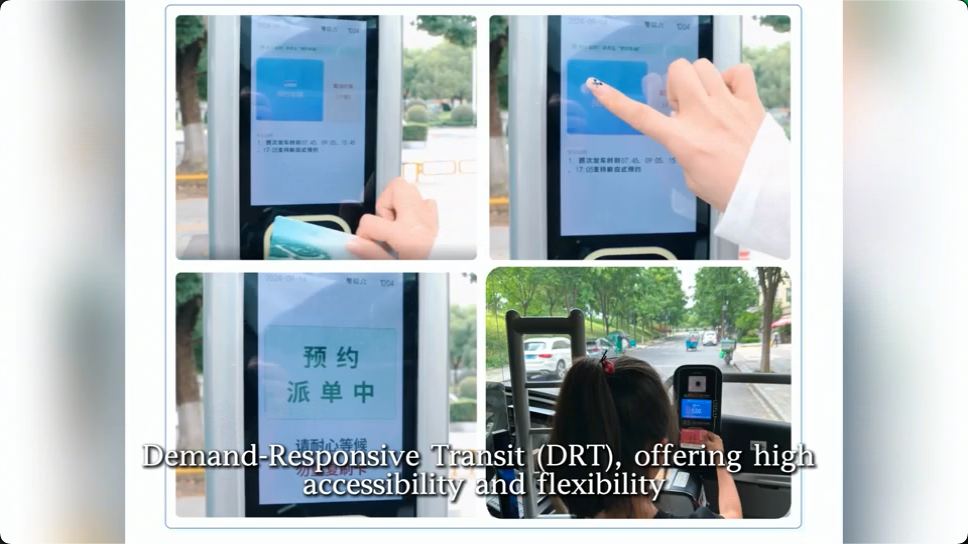
Customized Rural Transit (Lin’an)
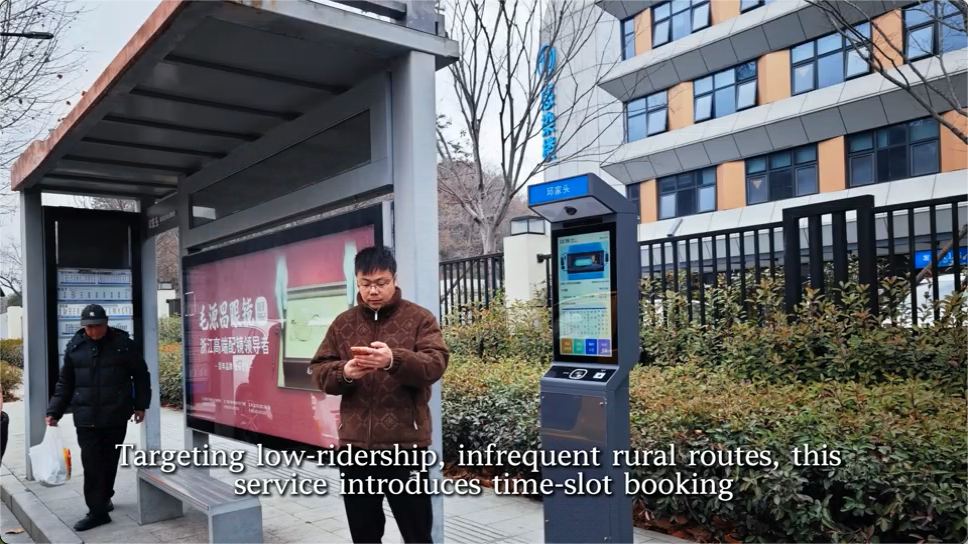
Targeting low-ridership, infrequent rural routes, this service introduces time-slot booking. The system dynamically plans routes based on real-time travel demand, supported by on-site booking equipment at stops to reduce deadheading. It also incorporates elderly-friendly features, making rural mobility more inclusive and user-centric.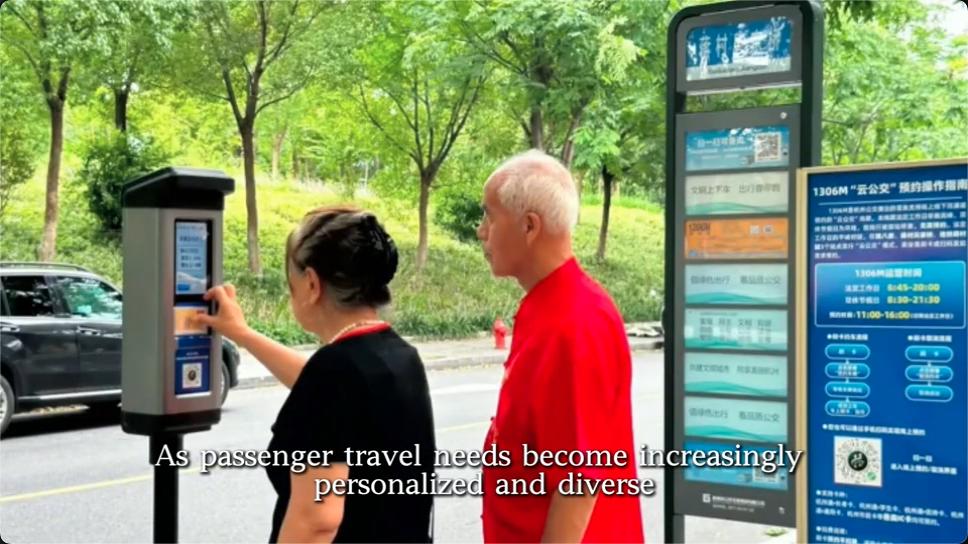
Dynamic Campus Shuttle (Yongjia, Wenzhou)
This model innovatively integrates palm vein recognition with DRT. Students can book rides simply by scanning their palms, eliminating the need for mobile phones. Booking status is displayed in real time, and boarding/drop-off records are instantly synced to parents’ phones to enhance safety and supervision. Operators can optimize dispatching based on data analytics, providing a highly efficient school commute service.
DRT for Cultural and Tourist Destinations
A smart connectivity solution tailored for scenic spots and tourism towns. Visitors can book electric shuttles with a single click via mini-programs or self-service kiosks. The AI system intelligently dispatches vehicles, optimizes routes, and simultaneously pushes tourist information. The backend dynamically allocates capacity based on passenger flow heat maps, perfectly balancing the visitor experience with operational efficiency.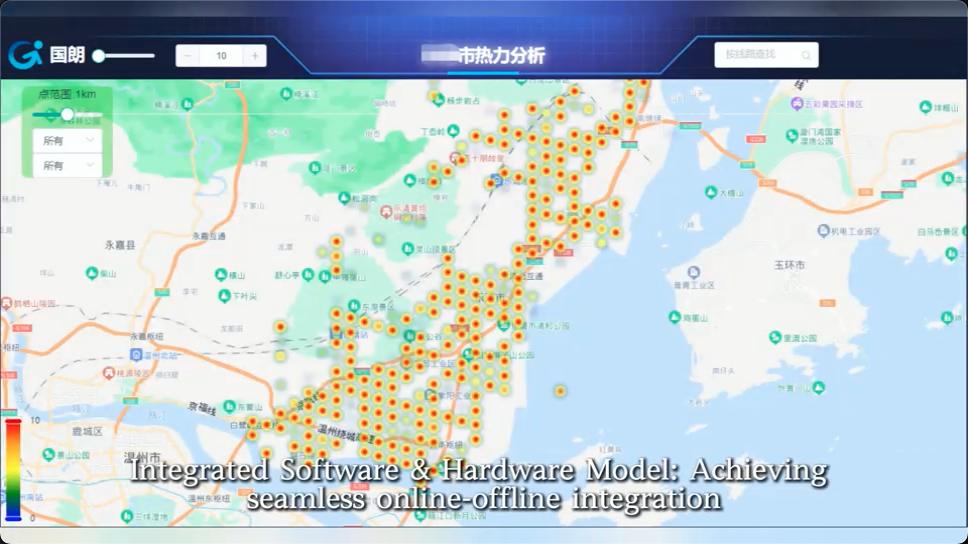
TwoCore Service Models
Software-Only Model: Featuring low upfront investment, rapid deployment, and flexible configuration, this model is ideal for short-term pilots, small communities, and scenic spots, primarily focusing on online services.
Integrated Software & Hardware Model: Achieving seamless online-offline integration, this model supports mobile-phone-free reservations. As an age-friendly solution covering diverse scenarios, it is perfectly suited for large-scale, long-term operations.
Through AI technologies and our dual-model innovation, Golong Technology is driving the transformation of public transit from “scheduled empty runs” to “on-demand departures,” comprehensively boosting operational efficiency and reducing costs. Empowering seamless urban and rural mobility through technology, we are committed to building a smart, low-carbon future for transportation.