


Recently, UnionPay released the 2020 China Bank Card Development Report, which details the development and trends of the bank card and payment industry.
As an emerging payment method based on NFC, the transaction scale of online and offline scenarios has been increasing in recent years. It has developed into one of the mainstream products of mobile payment. By the end of 2019, Huawei, OPPO, Vivo, Xiaomi, Apple, Samsung, Meizu, and other mainstream mobile phone manufacturers have achieved the commercial release of mobile payment.
According to the report, by the end of 2019, the cumulative card issuance volume of UnionPay mobile QuickPass had exceeded 76 million. In 2019, there were more than 700 million mobile QuickPass transactions. Its transaction amount is nearly 300 billion yuan, an increase of nearly 50% compared with the same period last year.
In terms of the use of different models, Apple Pay’s net card issuance volume increased by millions. The number and number of transactions increased by nearly 30% and 15% year-on-year, of which offline transactions accounted for about 70% of the total number and 84% of the number of transactions.
Net issuance volumes of Android mobile QuickPass were nearly 10 million cards. The number of transactions and transaction amount increased by about 160% and 72% year-on-year. Offline transactions accounted for about 84% and the total number of transactions accounted for 97%.
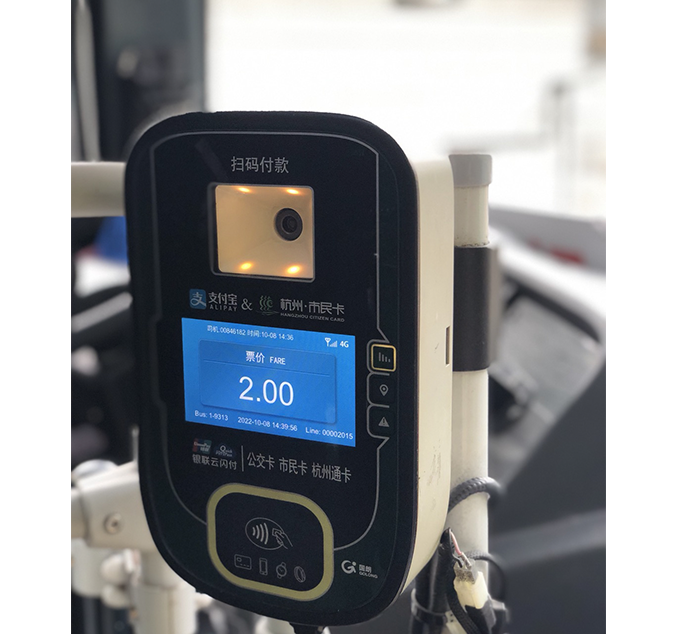
In terms of the net increase in card binding of mobile QuickPass, Huawei Pay ranked first, accounting for about 47%. In terms of scenarios, the bus and subway transactions accounted for 40% of the total volume of mobile QuickPass, and the proportion of supermarkets, stores, public utility bills, and other scenarios ranked second and third.
In terms of products and functions, the mainstream models of Android mobile phone manufacturers such as Huawei, Xiaomi, OPPO, and Samsung have fully supported the “all-in-one QR code”, promoting mobile payment to support more than 90% of users. Apple’s UnionPay QR code function will also be launched soon. The all-in-one QR code will also be supported at that time.
In addition to the all-in-one QR code, UnionPay has also launched a variety of payment innovation products such as mobile phone POS, tapping, etc.
By the end of 2019, the UnionPay POS function of mobile phones has been supported by the Huawei P series, mate series, Honor series, Xiaomi Mix2S, Mi9, and other mobile phone models. In 2019, China UnionPay continuously improved the security and reliability of its acquiring services, and independently developed a POS trajectory system of mobile phones based on the original POS products of mobile phones to conduct security monitoring of the transaction and effectively identify potential unauthorized payment.
Furthermore, products labeled “UnionPay Tapping” exchange information through the contact between the mobile phone and the embedded NFC tag, which reduces the costs of the merchant’s QuickPass of mobile phones. At the same time, it has high-security properties such as tamper-proof and anti-copy, which can provide small and micro merchants with safe and convenient payment services. By the end of 2019, more than 150,000 merchants had supported tapping payments. There were more than 20 banks and third-party acquirers.
In addition, smart wear also can support UnionPay QuickPass. At present, four major equipment brands such as Huawei, Xiaomi, Apple, and Samsung all support mobile wallets of smart wears. Swatch, Lakala, Garmin, Mobvoi, Amazfit, and other brands also have corresponding products of smart wears.
The above products on UnionPay QuickPass and smart wears need to pass the China UnionPay mobile payment product certification to make sure that the contactless functions of mobile phone products meet the UnionPay IC card specifications and mobile payment technical specifications. At the same time, product performance and compatibility should be paid attention to. By the end of 2019, 157 products were certified within the validity period of certification, including 134 types of mobile phones, 22 smart wears, and 1 innovative product. Therefore, NFC-enabled mobile phones are still the main form of authentication for mobile payment products in general.
Except for mobile payment, traffic cards of mobile phones have also been rapidly developed. Apple Pay could support the Beijing-Tianjin-Hebei Interconnection Card, Shenzhen Tong, and Yangcheng Tong. The number of supported transportation cards has reached 4. Additionally, mobile phone manufacturers in China have taken the lead. Huawei Pay and other transportation cards support as many as 40, and a few also support more than 10. With the support of the “China T-union”, there are 270 cities that can be supported.
Under the trend of mobile QuickPass and the overall development of mobile transportation cards, can NFC payment still reverse the situation and gain greater market favor?