

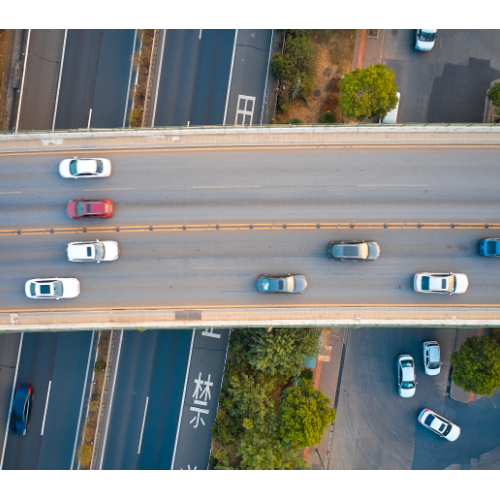
Introduction: Besides navigation software and ride-hailing apps, what other changes does "Internet" bring to the transportation sector? Industry insiders have painted a colorful picture: real-time reporting of road conditions via voice, traffic lights switching based on traffic flow, smooth travel, digitalization of driver's licenses, paying fines via mobile phones, and paying bus fares with mobile payments, eliminating the need to carry cash for bus travel. This is the change that "Internet + Transportation" will bring to our lives.
Let's take a look.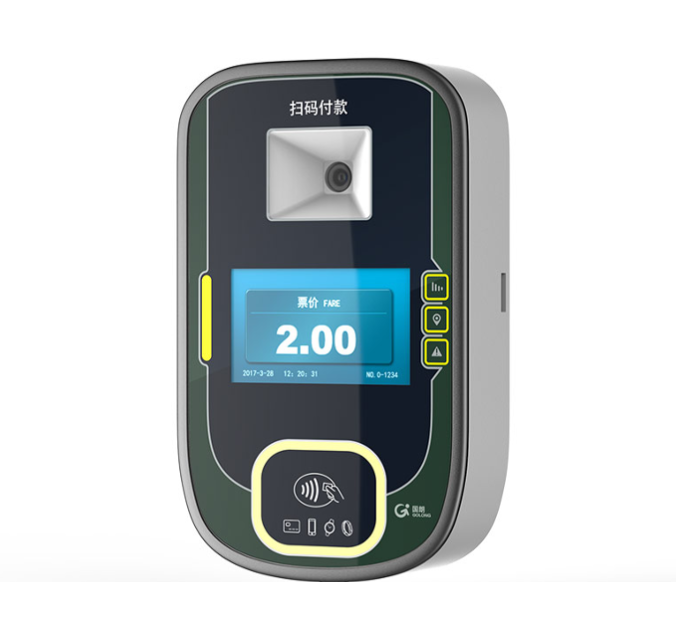
Travel: Real-time reporting of congestion, dynamic control of traffic lights
According to reports, the total number of motor vehicles in China has reached 283 million, with 348 million motor vehicle drivers. "The rapid motorization has brought enormous challenges to traffic management." Sun Zhengliang, Secretary of the Party Committee of the Traffic Management Science Research Institute of the Ministry of Public Security, said.
The emergence of intelligent reporting systems has resolved these challenges. Intelligent navigation allows drivers to communicate with dashcams: "Report 'facility'." "Please describe." "Traffic lights ahead malfunctioning." "Received." The entire process is controlled by voice commands, without the need for manual operation.
When "Internet & Transportation" arrives, integrated mobile payments will make travel even more convenient and flexible.
With the help of map platforms, information can be precise and dynamic. Similar to dynamic traffic updates, there is also dynamic control of traffic signals. Song Rong, Deputy Director of the Wuhan Traffic Management Bureau, introduced: "We are working with Aliyun to create an 'Internet & Traffic Signal' system. By combining traffic flow data from map platforms, we can optimize traffic signal control and reduce waiting times at intersections."
Interdepartmental cooperation and cross-application of data
Wang Gang, Deputy Director of the Road Network Monitoring and Emergency Response Center of the Ministry of Transport, revealed: "We are striving to collect maintenance and management information of highways and build databases." The center cooperates with meteorology, land, and other departments to conduct cross-border cooperation and make early judgments on disasters.
In improving public safety, traffic big data also plays a significant role. Many people graduate from driving schools but still don't know how to drive, becoming road hazards. One reason is that the practice time is insufficient. Smart devices and effective mechanisms should be used to accurately record practice hours and link them to the exam appointment system, preventing those with insufficient practice hours from registering for exams.
Identifying problematic vehicles and individuals is also a contribution of big data to public safety. With data collected from over 37,000 highway checkpoints nationwide, an average of 149 vehicles with fake or altered licenses and 2,872 vehicles overdue for inspection are caught every day. By further integrating vehicle trajectory information with data on drug users and stolen vehicles, we can better combat drug-driving and vehicle theft, strengthening cooperation across different police units.
Bus payments fully supported by card payment and QR code payment
Currently, mobile payments are playing an increasingly important role in our lives. Hangzhou Public Transport Group has introduced new bus validators to enable QR code payment for bus travel. Passengers only need to activate Alipay's Huabei feature to scan Alipay QR codes for bus rides.
With the new bus validators, bus payments can be fully supported by mobile payments. Manager Chen from the R&D department of Golong said: "We not only support QR code payments like Alipay, but also support various mobile payment methods such as UnionPay and IC card payments." Funds obtained through mobile payments are easier to settle, and moving towards cashless transactions also helps bus companies reduce labor and operating costs.
Hangzhou Golong Technology Co., Ltd. is located in Hangzhou, the city of e-commerce. It is a technology company specializing in industrial-grade comprehensive solutions for mobile payments and is a leader in the field of industrial-grade mobile payments.