

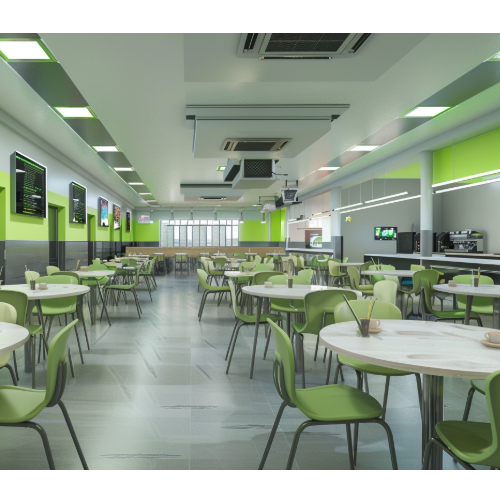
Currently, in Chinese society, students, as the fresh blood of the country's development, bear enormous academic pressure. Amidst intense competition, students' physical health has gradually become an important factor affecting their learning. Particularly for middle and high school students, they not only compete intellectually but also physically. Therefore, the construction of school cafeterias plays a crucial role, and whether students can eat well and eat healthily at school has become a matter of widespread concern. Optimizing campus cafeteria construction can be approached from the following aspects:
Implementing intelligent cafeteria management
Currently, most school cafeterias in China still use traditional offline purchasing methods. Although compared to previous fixed menu offerings, students now have enhanced autonomy in selecting dishes, there are still significant deficiencies in terms of the freedom and efficiency of dish purchasing. To address this, schools can adopt an information-based intelligent management approach, utilizing internet big data platforms to achieve information-based management. This can be achieved through parallel online and offline purchasing, allowing students to purchase dishes both in the cafeteria and online. Information-based management can greatly improve the operational efficiency of school cafeterias and enhance students' freedom in choosing meal times, thereby optimizing campus canteen construction.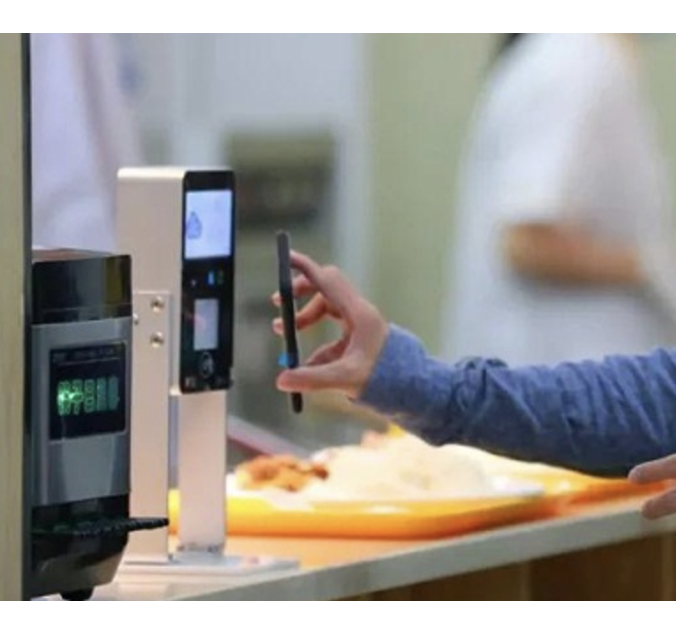
Diversifying payment methods in school cafeterias
Building upon intelligent canteen management, schools can further innovate in payment methods (mainly targeting university canteens) by expanding the variety of payment methods supported in school canteens. In addition to cash payments, introducing card payments, QR code payments, facial recognition, and other new payment methods can enable students to pay for dishes in multiple ways, increasing canteen consumption and facilitating dish purchases, thereby improving canteen operational efficiency.
Ensuring canteen hygiene and food safety
School canteens serve hundreds or even thousands of students daily. If canteen hygiene is inadequate, it can lead to widespread health issues. Therefore, ensuring canteen hygiene is crucial. Schools can establish supervision and management systems within the cafeteria department, assigning dedicated personnel to monitor and manage canteen hygiene. Procuring food from legitimate sources ensures the food's safety. Additionally, transparency in kitchen operations through intelligent management systems allows parents to observe and monitor canteen operations, thereby increasing parental confidence in school canteen and promoting canteen hygiene awareness.
Emphasizing the nutritional value of dishes.For school cafeterias, merely ensuring students are well-fed is insufficient. It's essential to provide students with nutritious and healthy meals. Therefore, school canteens should pay more attention to the nutritional value of dishes, ensuring students receive the necessary nutrients for growth and development while replenishing energy. Through intelligent management systems, schools can analyze the nutritional value of cafeteria menus using the nutritional analysis function, making further adjustments to canteen menus to enhance their nutritional value.
Increasing the variety of dishes
Schools can expand the variety of dishes based on existing offerings to meet the needs of more students. By analyzing canteen dish consumption patterns through intelligent systems and accurately understanding and analyzing student demand using internet big data, schools can reduce less popular dishes, innovate with more types of dishes, and increase student satisfaction and trust in school canteens.
Facilitating cafeteria feedback
To better optimize operations based on student needs, for middle and high schools, canteen departments can set up feedback points within the cafeteria to encourage students to provide feedback on issues and shortcomings or express their needs. Canteens can adjust operations based on student feedback and regularly respond publicly to student feedback. This approach cultivates students' ability to voice opinions and suggestions while optimizing cafeteria operations. For university campuses, internet communication devices and intelligent systems can allow students to directly evaluate dishes online, enabling schools to address student feedback centrally and provide direct online feedback.
Implementing staggered dining by grade
Due to the large number of students in Chinese schools, students may spend a long time queuing for meals in cafeterias, which may disrupt study and rest time. Schools can implement grade-based dining schedules, specifying different dining windows for different grades. For example, setting up a designated area for senior high school students to queue for meals, while junior high school students dine at the same window. This approach can improve dining efficiency and reduce student waiting time.
Implementing staggered dining to avoid rushing for meals
Similarly, to address overcrowding issues, schools can implement staggered dining schedules, with different grades assigned different dining times to stagger meal peaks. At the same time, schools should manage and penalize behaviors such as rushing to eat first to avoid stampede accidents.
Advantages of the Smart Campus:
The intelligent devices and smart campus service platform are introduced in this collaboration provide one-stop services for the management, teaching, learning, and
Advantages of Intelligent Payment Machines:
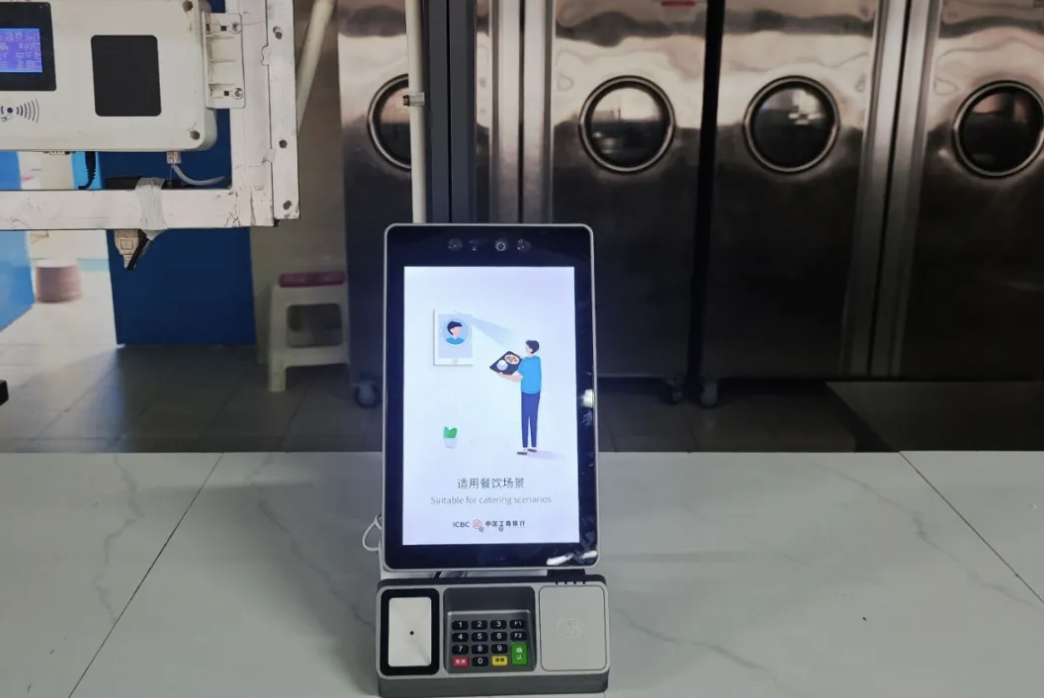
When paying fees in the cafeteria, students can pay for meals according to their payment habits by entering payment information. It supports card tapping, code scanning, and facial recognition, allowing students and faculty to freely choose their payment methods. In design and implementation, emphasis is placed on features such as cross-platform and compatibility.
1.Camera: Equipped with dual-lens camera, detect people, supports QR code payment
2.QR code scanning: a base equipped with a dedicated scanning head;
3.Broadcasting: Supports headphones, supports recording, supports voice playback
4.Multi-functional application: Support multi-application architecture, capable of storing and running multiple application software simultaneously;