

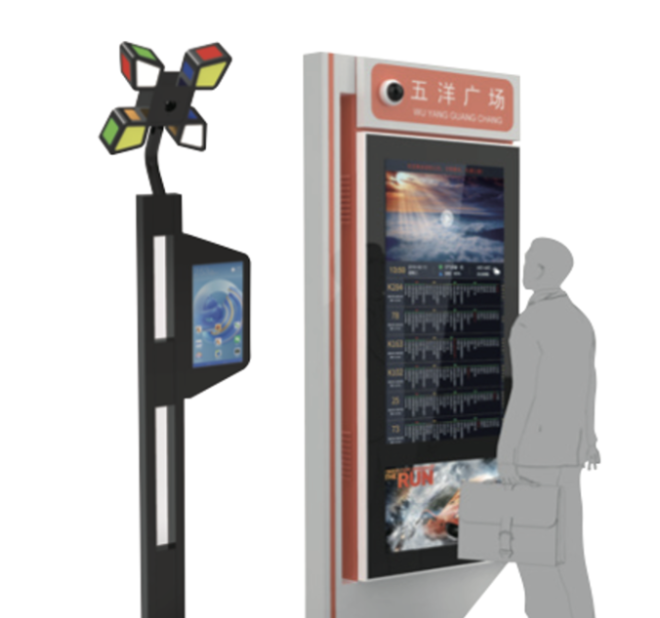
The intelligent electronic bus stop system will integrate global satellite navigation technology (GPS), advanced communication methods, geographic information system technology (GIS-T), video transmission, and intelligent sensors into a next-generation application system. By leveraging the data from the existing intelligent bus dispatch management system, which provides GPS-based bus arrival information, the project aims to establish a real-time bus arrival prediction system. Upon completion, the system will cover most bus stops and provide real-time arrival information for all bus routes. It will offer passengers accurate real-time bus arrival forecasts. The project also includes multimedia video playback, real-time video monitoring, passenger feedback services, and public information dissemination.
Implementation Plan:
Based on the existing bus dispatch system data, GPS-equipped buses will transmit their location data wirelessly to the control center server. This data will be used to calculate real-time bus arrival predictions, and the results will be sent to smart bus stops equipped with wireless communication devices. The predictions and information will be displayed on LCD screens at the stops.

Equipment Functions
Real-Time Bus Arrival Prediction: Display arrival information, including line forecasts and stop distance predictions.
Multimedia Video Information: Display time, date, weather forecasts, government information, advertisements, etc.
Voice Announcement: Use a TTS (Text-to-Speech) system to announce bus locations in real time, with volume control and automatic adjustments based on time of day.
Mobile Intelligent Monitoring: Monitor passenger flow, vehicles, and security at bus stops in real time.
Automatic Detection: Detect abnormalities in bus stops and automatically send alerts to the control center and designated mobile phones.
Remote Settings: Include functions like scheduled power on/off and lighting control, reducing power consumption, lowering maintenance rates, and saving human labor costs.
Wireless Charging: Provide free charging services using the latest wireless charging technology.

Equipment Components
The smart electronic bus stop system consists of six main components: Bus Stop Cabinet System, Information Publishing System, Video Surveillance System, Centralized Control System, Security Control System and Centralized Power Supply System.
Bus Stop Cabinet System: Include the management cabinet, LED cold light source, cooling system, and high-power safety management system.
Information Publishing System: Utilize high-performance LCD industrial-grade displays for information dissemination.
Video Surveillance System: Use high-definition cameras and DVRs to monitor security and passenger flow at the stop.
Centralized Control System: A high-performance industrial computer controls the operation of the entire electronic bus stop.
Centralized Power Supply System: Relays, switching power supplies, electricity meters, and timed switches ensure stable and reliable power supply.
Security Control System: Equipped with alarm devices to monitor environmental and equipment status, alerting in case of illegal intrusion.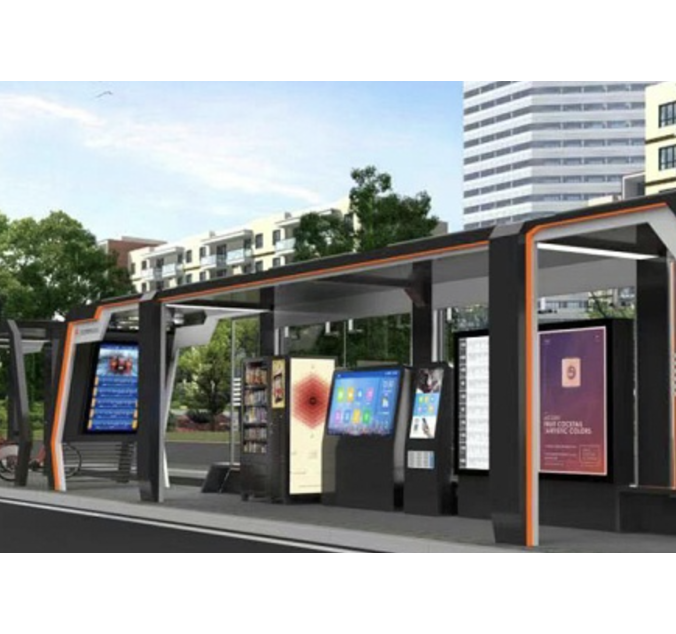
Key Functions of the Management Workstation
- Receive data from the communication server at any time and displays the distance or time until the bus arrives at the stop.
- The control center's electronic map provides query functions for vehicles, routes, roads, and related data.
- The electronic map displays the current status of vehicles on each route, such as running, off, or malfunctioning (supported by GPS technology).
- Based on vehicle distribution, the dispatch room can determine traffic congestion levels and send dispatch or control instructions to drivers.
- Provide smart bus stops with the first and last bus departure times for each route, the estimated distance, and time from the departure point to the current stop, as well as road condition information, advertisements, and more.