

What are the Applicable Scenarios for On-Demand Bus Services?
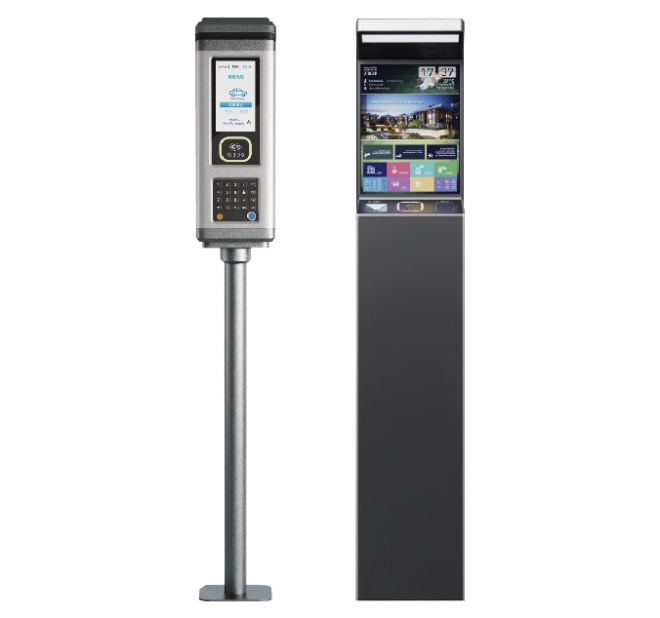
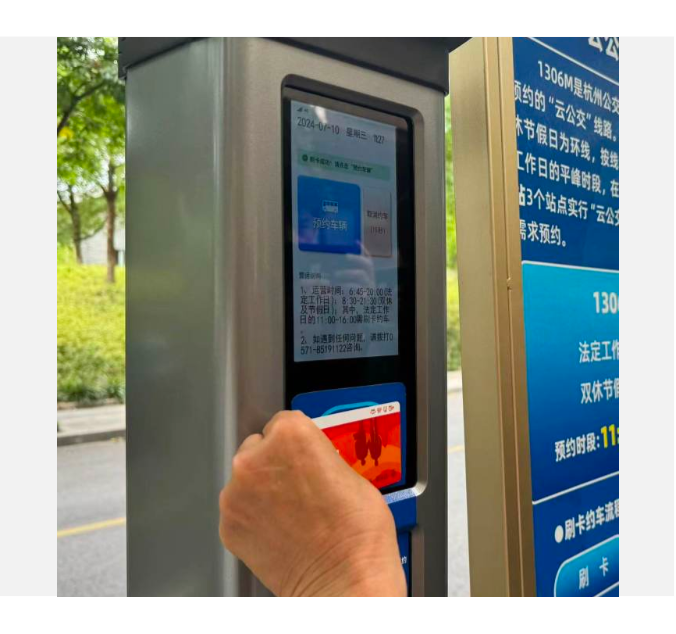
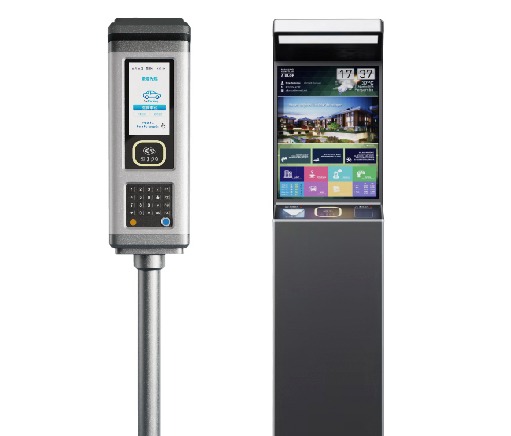
Smart piles cater to personalized and diversified service needs, integrating multiple payment functions. They are designed specifically for outdoor environments, meeting the demands of outdoor use.
Scenario 1: Circular Bus Route with Fixed Stops
Buses on circular routes cover the entire service area, but during off-peak hours, they often run with a high rate of empty seats. "For passengers who want to take the bus during off-peak hours, especially elderly passengers without smartphones and young passengers, they can make a reservation by tapping a card and enjoy the convenience. This helps address the mismatch between supply and demand, reducing long waiting times for passengers and excess empty vehicles for the elderly and young.
Scenario 2: Integrated Online-Offline Service for Village-to-Village Bus Routes
For the traditional fixed stop village-to-village bus routes, the core challenge lies in covering long distances from urban areas to rural areas with low passenger volume and long intervals between buses, resulting in long waiting times. Public transportation companies can adopt a reservation-based bus operation model to solve this issue, offering customized services through an online and offline carpooling reservation system.
Fixed village-to-village buses can be switched to a reservation bus model, where passengers can reserve bus trips in advance.
They can choose their pick-up location by tapping a card or using an online app to form groups for carpooling. Passengers receive notifications via SMS or system reminders, and buses depart as soon as the required group size is met. The system is also designed to accommodate elderly passengers, allowing them to make reservations using a smart pile at physical stops. Whether online or offline, once 10 passengers have reserved a trip, the bus will depart on time.
This carpooling reservation model helps reduce costs, meet the travel needs of passengers more accurately, minimize empty runs, and increase operational efficiency. It also reduces vehicle investment and conserves transport capacity.
Scenario 3: Customized Bus Service for Smart Campus
To meet the personalized needs of campus environments, customized bus services can provide a "safe travel" reservation service. This model is tailored for school scenarios, offering custom bus routes. It improves the efficiency of bus responses and eliminates the need for manual tracking.
By leveraging palm vein payment technology, integrated smart devices, and an intelligent management SAAS platform, the system links with parents' mobile devices to enable easy payments, safe travel, and seamless on-demand transportation.
For smart campus scenarios, the convenience lies in providing a "point-to-point" reservation service. This solution consists of two parts: a mini-program for reservations, verification, and payments, and the smart pile hardware.
The smart piles are designed for outdoor use, and the operation process is simple. Students first complete authentication in the program. The mini-program offers "easy registration" and "scan-and-go" services. Through the Golong SAAS platform and the WeChat ride code system, students can input their information and use palm vein payment to verify their fares during bus rides.
Once registered, students can also make reservations offline at campus bus stops. They simply follow the prompts, choose a route, and scan their palm to confirm the reservation. No smartphone is required to complete the operation.
After a successful reservation, students can monitor the status of their customized bus in real-time on the smart pile screen. The Golong public transit big data analysis platform automatically assigns buses, and the system back end intelligent dispatch program provides vehicle details, including license plate numbers, arrival distance, and estimated arrival time, displayed on the smart pile terminal for student reminders. Students can verify their fare by scanning their palm at the terminal, and the fare is automatically deducted through offline payment.
In the era of mobile internet, the customized bus service model effectively addresses the needs of students without smartphones, offering convenient reservation, payment, and short waiting times, ultimately improving travel efficiency and safety.
Software Platform Application
Intelligent booking terminal based on site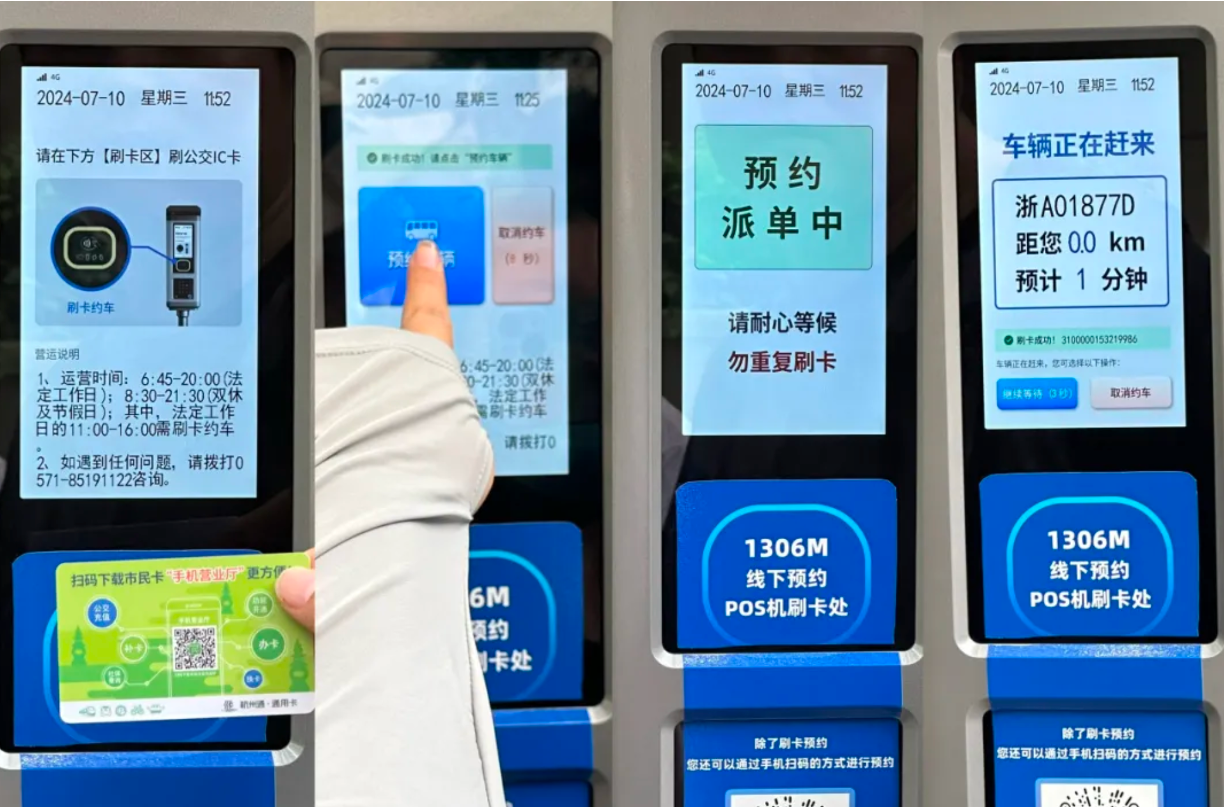
●Passengers use existing payment methods of the project to tap cards/scan codes for ticket or trigger the booking mechanism through a button (the booking method can be customized);
●The machine receives passenger transaction data,The terminal sends transaction data to the backend communication service program.The SaaS platform receives transaction data from the frontend, confirms transaction information;
●Backend transaction data reception results return to the frontend device status;
The frontend equipment receives the backend transaction data reception success status response, with voice broadcast: "Debited xx yuan, booking successful" (booking method and deduction order can be customized according to business requirements).Frontend booking transaction data is stored in the database;
Responsive Bus:
●Passengers complete booking needs through intelligent terminals
●Prepay for booking
●Use credit points for booking
●Voice prompt for booking result
●Page prompt of booking result
●Real-time interaction of booking information
●Periodic synchronization of data information
●Real-time upload of transaction data
●File information interaction processing
Golong WEB management platform regularly (time tentatively set to 30 seconds) retrieves the database transaction status.The WEB management platform provided by Golong, retrieves booking payment transaction records and pops up information records of bookings on the WEB management platform, including: booking site, route, fare, number of people, etc.Public transport dispatch backend personnel notify the relevant route drivers based on the information from the WEB management platform and their dispatch system.Drivers receive notification information from backend dispatch personnel and arrive at the designated site.
Vehicle arrival verification process: Drivers receive notification instructions from the backend dispatch system and arrive at the designated site.Passengers scan codes/tap cards again upon boarding.
Transaction data sent to backend communication service,Backend communication service parses and stores data.Golong WEB management service platform outputs booking reports and statistical reports;
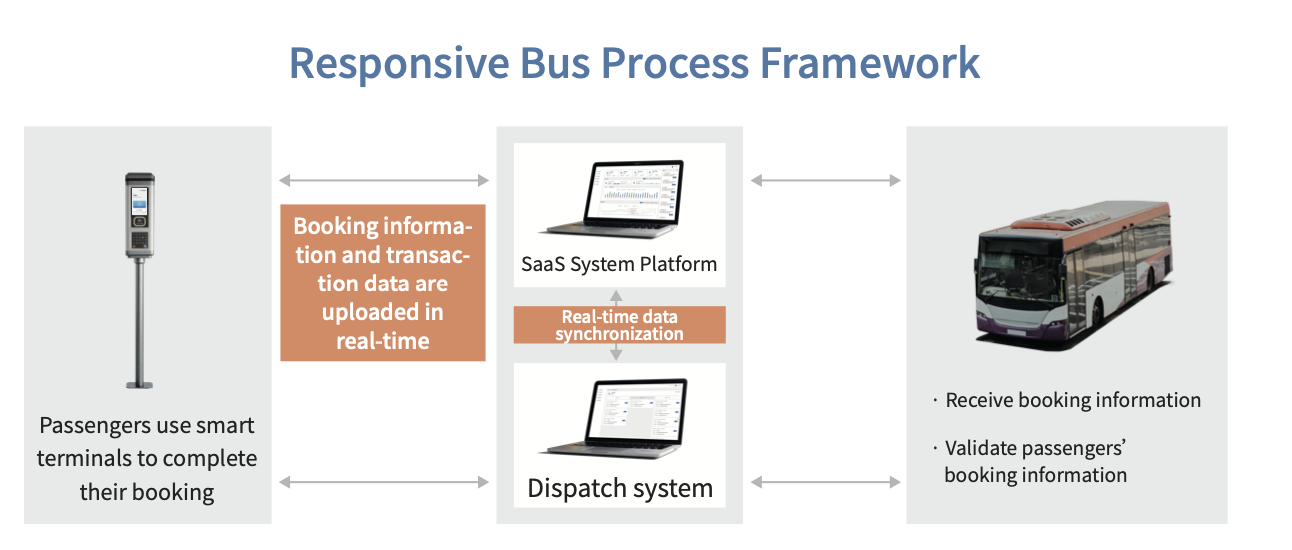
SaaS System Platform:
1.Real-time synchronization of data status:Dispatch system
2.Receive booking information from the dispatch system
3.Arrive at the booking site
4.Cancel passenger booking information
5.Real-time upload of data
6.Operational Dispatch Management:Achieve centralized dispatch of buses and real-time and monitored management of data
7.Real-time positioning
8.Video monitoring
9.Booking reminders
10.Assessment management
11.On-time departure
Optimized Resource Allocation:Real-time data analysis allows bus stop adjustments based on passenger demand, avoiding ineffective stops and improving bus operation efficiency.
Increased Passenger Satisfaction:The responsive bus solution adjusts in real-time to meet passenger needs, making travel more convenient and increasing satisfaction.
Energy Saving and Emission Reduction:Reduce unnecessary driving mileage, lowers energy consumption, and help reduce carbon emissions, promoting environmental protection and energy saving.
Lower Operating Costs:By reducing ineffective driving and optimizing route planning, operating costs are reduced.
Customized Needs:In rural areas with limited quantity and dispersed travel demand, a reservation-based, responsive public transit model is adopted to meet the service needs of rural residents, achieving precise matching of travel demand and transport capacity.