


With the development of smartphones and the Internet, mobile payment has become the fastest-growing payment method in China. Various new payment methods have emerged, such as QR code payment, NFC payment, etc. In recent years, with the gradual development of artificial intelligence, machine learning, and sensors, biometric technology has also been applied to mobile payments, such as fingerprint payment, face payment, etc.
This article mainly introduces the generation, development history, current mainstream products on the market, future trends, and related suggestions.
1.Basic Concepts of Face Recognition
Face recognition is a biometric technology that performs identity recognition based on the facial features information of a person. A series of related technologies are used. First of all, cameras can collect images or video streams that contain human faces. Then, human faces can be automatically detected and tracked. Finally, facial recognition can be realized. Face recognition can mainly be divided into three steps: face detection, face feature extraction, and face matching. Face detection mainly captures the presence of faces in pictures or videos, and then collects size, position, and other information. Face feature extraction refers to accurately locating the position of key areas of faces. Face matching refers to judging whether a face exists in the database, and then finding the most matching face in the database. The biggest feature of facial recognition technology is to avoid the leakage of personal information and to identify it in a non-contact manner (users do not need to contact the device directly).
Face recognition can be divided into 2D face recognition and 3D face recognition according to the different expression models of faces. 2D face recognition has been researched for a long time, so its method and process are relatively mature. However, it has limitations in deep data loss. It is impossible to fully recognize the real face. Therefore, there are problems such as low recognition accuracy, low face detection accuracy, etc.
3D face recognition has more data and information in terms of color, texture, depth, etc. Therefore, 3D face recognition has more advantages than 2D face recognition in terms of recognition accuracy and face detection accuracy.
At present, many universities, research institutes, and commercial institutions at home and abroad are engaged in research work related to face recognition, such as VisionLabs, Yitu, SenseTime, Megvii, CloudWalk, etc. With the gradual improvement of research, facial recognition technology has been widely used in public security, attendance, intelligent access control, finance and security, and other fields.

2.Development history and current situation of face payment
Development history
Face payment mainly relies on face recognition technology. The application of face recognition to the payment field originated in Finland. In July 2013, Uniqul launched the first facial recognition-based payment system. When checking out, consumers only need to face the camera on the POS screen at the cash register. The system will automatically take a photo, scan the face, and then compare the image with the stored information in the database. The face information is also associated with the payment system at the same time. When the identity information is displayed, consumers can confirm on the display. The entire transaction process is completed. Subsequently, countries such as the United States, the United Kingdom, and Japan have also launched their own face payment systems, such as Google’s payment app—Hands Free.
With the continuous improvement of face recognition technology, relevant domestic institutions have also begun to carry out research and development and commercial exploration of face payment technology. At present, Ali, Tencent, and UnionPay coexist with each other. Ali is the pioneer of face payment.
In 2015, Ma Yun showed the facepayment technology at the Hannover exhibition in Germany.
In September 2017, Alipay launched face payment at KFC’s concept restaurant KPRO, which is also the first commercial pilot of face payment in China.
In December 2018, Alipay officially launched the “Dragonfly” face payment product. Users can use face payments in hospitals, supermarkets, restaurants, brand retail stores, and other places.
In April 2019, “Dragonfly 2.0” was launched. “Dragonfly 2.0” has not only improved the lightness of the machine, the pass rate of face, and the stability of payment but also introduced the function of joining membership as long as using face payment. As a commercial competitor, Tencent also began to speed up the layout of face payment.
In 2018, the WeChat face payment system began to be promoted and used in physical stores.
In March 2019, WeChat’s face payment device “Frog” was officially launched. It also began to expand its merchants nationwide.
In August 2019, WeChat Pay officially released “WeChat Frog Pro” equipped with a code scanner and a double-sided screen.
In addition to the above two institutions, UnionPay also began to lay out related businesses after seeing the business development opportunities of face payment.
In January 2017, UnionPay showed Face Pay, a payment system based on facial recognition, at the Singapore FinTech Festival.
In October 2019, UnionPay, together with more than 60 institutions such as Industrial and Commercial Bank, Postal Savings Bank, and CITIC Bank, jointly released the “Face Payment” payment product.
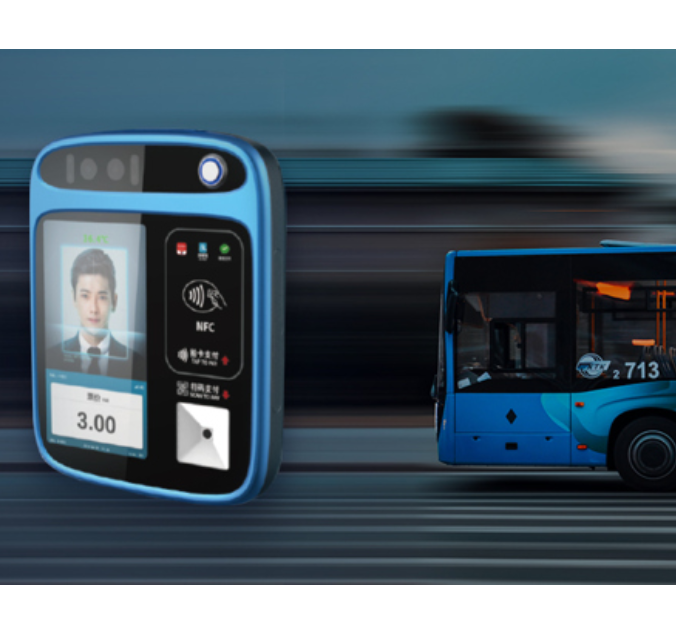
At the end of October 2019, China UnionPay Merchant released its face payment terminal “Blue Whale”, which realizes the terminal aggregation of UnionPay face payment and WeChat face payment. Users can choose to enter different operating environments of face payment.
Business Process
Since the current business processes of face payment products have not been standardized, there are still some differences in different institutions. Alipay and WeChat Pay are basically the same. The details are as follows: First, users enter the payment link and select the face payment method. Then, users use apps to collect faces that can meet the quality requirements. After that, users enter the mobile phone number bound with Alipay (or WeChat). According to the security decision-making system of the Alipay (or WeChat) face payment, the number of mobile phone numbers required to be entered may be different. When users visit some stores they hardly go to, it is necessary to enter the whole phone number. On the contrary, users only need to enter the last 4 digits of the phone number or even do not need to enter the phone number in the stores they frequently go to. They can directly enter the payment confirmation page (the determination logic of the digit number is automatically determined by the face payment system).
The business process of UnionPay face payment is different from that of Alipay and WeChat Pay. The security verification method needs faces and passwords. The main process is as follows: First, users enter the payment link and select the face payment method. Then, users use apps to collect faces that can meet the quality requirements. After that, users need to enter the payment password. If it is correct, the user will finally enter the payment confirmation page to complete the payment.
3.Related technologies
In the process of realizing face payment technology, 3D face recognition technology is usually used at present. Before face recognition, 3D face recognition technology will perform live detection through a combination of software and hardware to determine whether the collected face is a photo, video, or software simulation. Face payment requires not only the support of face recognition algorithms but also the support of hardware devices such as corresponding camera modules.
In terms of hardware, the 3D light camera is a mature solution in the current mainstream 3D camera module solutions and commercial prospects. The principle of 3D light technology is to project 20,000 to 30,000 scattered spots with an infrared emission laser, and then complete the measurement of the position depth according to the change of the light perceived by the infrared receiving camera after being folded back.
The camera module involves multiple links of precision optical design, chip, algorithm, and production, and the technical standard is high. Therefore, only a small number of enterprises can achieve mass production of dimensional camera modules in China. At present, Alipay “Dragonfly” uses the camera provided by Mario which is jointly established by Ant Financial and Orbbec. WeChat “Frog” uses HJIMI as a 3D camera module service provider. UnionPay “face payment” is mostly from Orbbec and HJIMI.
In terms of face recognition algorithms, Ali, Tencent, and UnionPay are currently mainly adopting self-developed or cooperative strategies with professional face recognition companies. Alipay “Dragonfly” and WeChat “Frog” mainly come from self-development. UnionPay “Face Payment” mainly comes from service providers such as Yitu, SenseTime, Megvii, CloudWalk, etc.
4.Product advantages
Face payments have the following advantages:
- It is fast. Face payment can achieve quick recognition and verification, which can make payment more convenient.
- It is convenient. Compared with the limitations in fingerprints and scanning codes, face payment does not need mobile phones, which is more convenient for elderly people who are not proficient in using smartphones and easy to forget passwords.
- It is safe. Face payment uses the latest 3D face recognition, combined with dual detection of hardware and software. It is safer than QR code payment.
- It can save costs. According to official statistics, face payment can save 50% of the time cost. Self-service cashiers and face payment can effectively alleviate the phenomenon of checkout queuing during peak hours in supermarkets, restaurants, shopping malls, and other consumer places.
Future development trend of face payment
At present, face payment has been widely used in the market. The following trends will appear in the future development:
Improved accuracy of face recognition
Although face payment has been used in commercial scenarios, users occasionally come across backlighting and unsuccessful recognition, which affects the user experience. In addition, similar twins and cosmetic surgery will affect face payment. With the advancement of artificial intelligence algorithms and camera hardware technology, the accuracy of face recognition will be gradually improved. Therefore, user experience can be optimized.
Product standardization
Although many organizations have launched face payment products, the business process, performance, and security standards for face payment still lack uniform standards. Relevant departments are also studying and developing relevant standards. In November 2019, the National Financial Standardization Commission issued a draft for comments on the “Technical Specifications for Offline Payment Security Applications of Face Recognition”. In the future, the standardization and normalization of face payment products is also one of the development trends.
Provision of marketing value-added services
The face payment system not only provides merchants with smart cashier solutions for merchants but also superimposes marketing and value-added services on this basis. Compared with traditional intelligent POS, QR code scanning terminals, and other devices, face payment devices have changed from simple acquiring terminals to comprehensive merchant cashiers and management devices. In the future, when users pay, merchants can play member-related advertisements on the screen. Users can directly enjoy the rights and benefits after opening, to realize the intelligent operation of payment, membership, cards, coupons, and advertisements.
Widened application scenario
At present, face payment is mainly used in retail and catering scenarios. With the increase in market popularity in the future, its application scenarios will inevitably gradually expand to more fields such as travel and living expenses to meet the actual needs of users.
Aggregated payment services
Currently, there are some differences in face recognition algorithms and camera module group selection among face payment service providers, so there is still a lack of face payment terminals that can support Alipay, WeChat Pay, and UnionPay at the same time. Based on hardware costs and user needs, aggregate payment is an inevitable development trend in the future.
Competition from other payment methods
Although face payment methods have begun to be applied in the market and have initially achieved good results, the development of mobile payment methods has also shown a diversified trend, such as NFC payment, QR code payment, palm vein payment, and fingerprint payment. Whether face payment can occupy a certain share of the market in the future still needs to be tested by the market.
Conclusion
Face payment has officially been used. It has seized the original payment market with thunder and lightning. This article mainly summarizes and analyzes the development process of face payment, the current mainstream products, and the future development trend. The payment methods in the future will certainly become more convenient and more secure.