

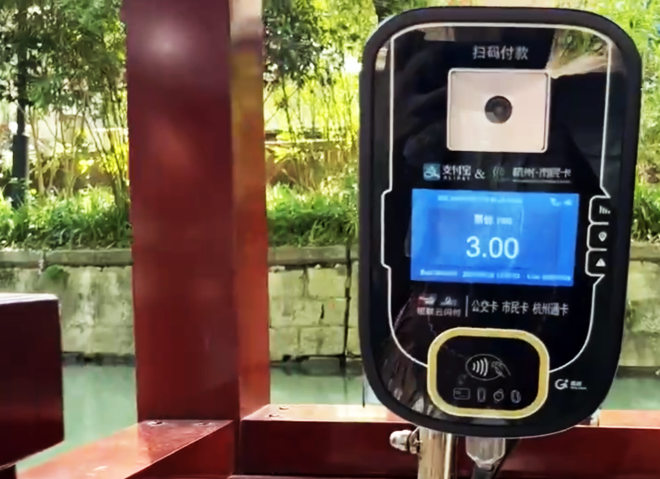
Internet & intelligent Bus POS machine payment: BATJ rush into smart transportation

With the arrival of the mobile payment tide in public transportation, new payment methods under the background of the Internet are also receiving increasing attention from enterprises. The payment systems of Hangzhou Metro and buses enable subway gates that traditionally only recognize fixed tickets and cards to combine with bus POS machines and the Internet, providing network identity recognition and payment settlement functions, and realizing various payment functions.
Currently, Hangzhou Metro entrance gates and Hangzhou intelligent bus POS machines are divided into two types: cloud gates and traditional gates. Among them, cloud gates support NFC contactless payment, Alipay QR code payment, and other mobile payment methods.

Hangzhou Bus POS machine mobile payment
In the tide of entering public services, payment giants such as Alipay, WeChat Pay, and UnionPay are competing to lay out, and the competition for mobile payment scenes has finally shifted from merchant payments to public transportation.
Mobile payment targets the new blue ocean of bus travel
Using mobile phones to take buses was first realized in August 2016, when Alipay joined hands with Hangzhou Public Transport Group to implement it on bus route 506 (from Wulin Gate North to Yuhang). This is a method of aligning the QR code generated by Alipay with the bus POS machine on the bus, scanning it, and completing the payment upon hearing a "beep" sound.
Virtualizing traditional bus cards, for bus companies, further improves cashier efficiency and avoids the problem of counterfeit coins. For card companies, this achieves informatization and mobile internetization, from the previous "recognizing cards but not recognizing people" to "one card per person", and the subsequent data value can be further explored.
In the past, it was inconvenient to take the bus without a transportation card, and the most annoying thing was to search through pockets for change. Now, you don't need to carry a transportation card or coins anymore. You can take the bus by simply tapping your phone, which greatly facilitates local residents and tourists, especially tourists.
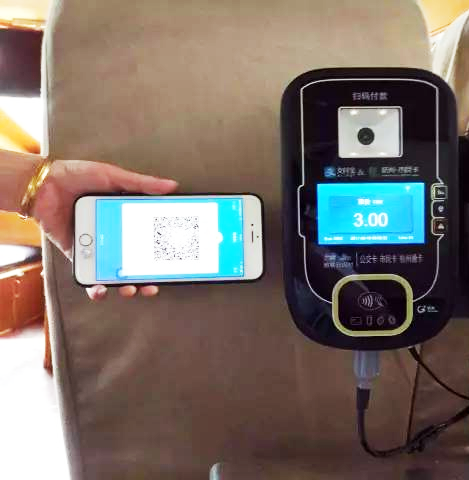
With the development of mobile payment, the field of public transportation mobile payment has expanded from buses to subways, and payment forms include various forms such as NFC contactless payment, Alipay, and WeChat QR code payment. Currently, based on the situation in Beijing and Hangzhou, after the intelligent mobile payment function is opened, the sales volume of public transportation cards has decreased.
BATJ and UnionPay join forces.
Currently, Tencent, Alipay, UnionPay QuickPass, and JD Pay have all laid out in the field of public transportation travel, and the combination of small amounts, high frequency, and rigid demand has become a must-enter place for mobile payment giants.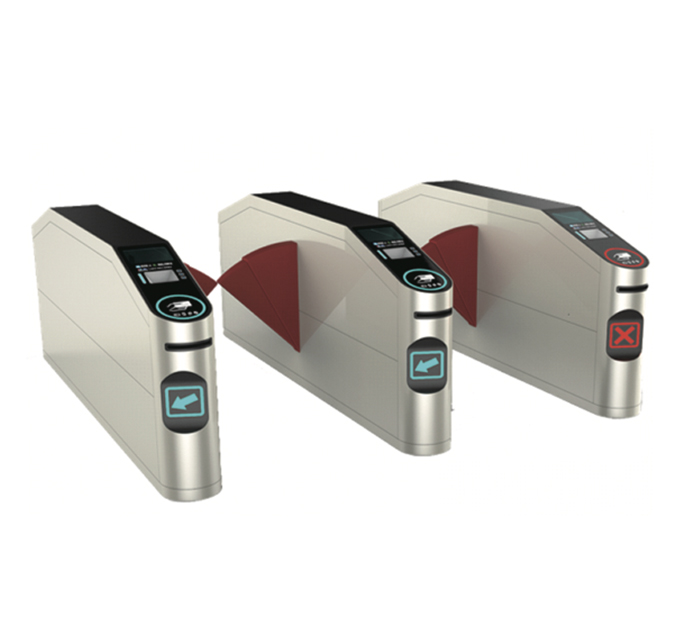
According to Alipay, after generating the ride QR code, based on Alipay's "board on first, pay later" credit ability, the user's identity is first recognized by scanning the QR code, and after successful recognition, the user can easily pass through the gate and take the subway first, with the deduction of subway fees occurring later. Even without a network signal or insufficient balance in the Alipay account, passengers can still ride first.
Similarly, JD Pay's layout in the field of public transportation travel also adopts the model of boarding on first and paying later. In September 2017, JD Pay and Beijing Rail Transit single-ticket Internet ticketing official service platform - Yitongxing APP launched the "e-code" payment service. Users only need to download Yitongxing APP to activate "e-code" and bind JD Pay as the post-payment deduction account to use the service to ride the Beijing subway. JD Pay's approach breaks the barrier of pre-recharging consumption for users to ride the subway, and is a comprehensive upgrade of consumer travel payment experience.
UnionPay QuickPass's "boarding on first, pay later" is achieved through pre-authorization. The above-mentioned interviewee Xiao Yan stated that if you choose the QuickPass mode to enter the station, you can first swipe the pre-authorization when entering the station, and then settle after leaving the station.
"Pay with a tap" and "pay with a scan" have become the new normal for people's transportation. According to incomplete statistics by reporters, in the field of bus travel, payment methods such as scan-to-pay (purchase tickets, e-codes); wave-to-pay payment methods rely on NFC technology, including using smartphones, wearable devices (Huawei Pay, Apple Pay, Samsung Pay, Mi Pay), or opening bank cards with QuickPass functions.

Golong Technology Co., Ltd. is located in the e-commerce capital, Hangzhou, and is a technology company specializing in industrial-grade comprehensive mobile payment solutions. It is a leader in the field of industrial-grade mobile payment. The company is committed to providing customers with industrial-grade travel payment terminals, industry big data operation, and industry Internet operation comprehensive solutions.