

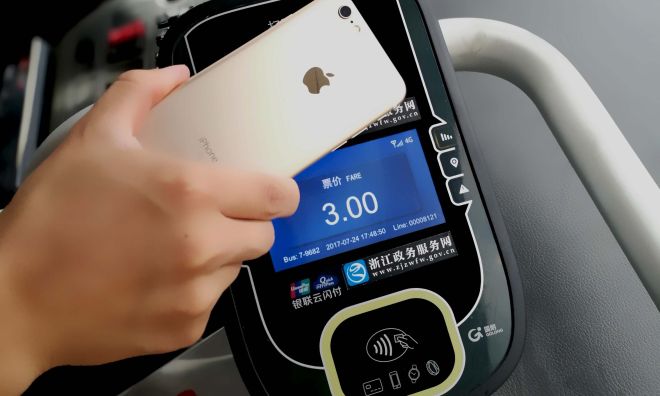
National buses suffer a loss of over 400 million yuan annually due to counterfeit coins. Intelligent bus card machines are expected to end the coinage problem.
Recently, news of Sichuan Suining Public Transport receiving 150,000 yuan of counterfeit coins in a year has attracted widespread attention. Due to some passengers not following the rules when paying with coins, Suining Public Transport Company receives a large amount of invalid currency every year, causing considerable losses to the company.
In recent years, the "chaos of bus coinage" has been exposed in many parts of the country and has become a chronic problem plaguing the national bus industry. National buses lose over 400 million yuan annually due to counterfeit coins. However, with the development of new payment technologies for buses and intelligent bus card machines, especially the promotion of "scanning QR code to take the bus" technology, the long-standing problem of counterfeit coins on buses is expected to be resolved.
Counterfeit coins on buses:National buses lose over 400 million yuan annually due to counterfeit coins.
In early 2018, when more than ten employees of the cash center of Suining Public Transport Company in Sichuan were busy calculating the previous year's income, they found hundreds of yuan of "counterfeit coins" from the mountains of change, and even tens of thousands of game coins and non-redeemable foreign currency.
Personnel of Suining Public Transport Company said, "Since the company began implementing automatic coin payment by passengers in 2013, the amount of invalid currency received by the company has increased year by year. Now the company receives approximately 150,000 yuan worth of invalid currency each year." To prevent the 2 tons of invalid coins received in recent years from entering the market, Suining Public Transport Company can only bury or destroy them uniformly.
In fact, not only Suining, but also bus companies in Dalian, Foshan, Qingdao, and other places have encountered similar problems, and counterfeit coins have become a national phenomenon that troubles buses.
Preliminary statistics: Suining Public Transport Company loses 150,000 yuan annually due to invalid coins. The official website of Suining Public Transport Company shows that it has 222 buses, which means that each bus loses about 676 yuan on average. According to the "2016 Traffic Transportation Industry Development Statistics Public Bulletin" of the Ministry of Transport, at the end of 2016, there were approximately 608,600 public buses in China. Roughly estimated, national buses lose over 400 million yuan annually due to counterfeit coins, and this loss does not include the cost of public transport companies manually cleaning and destroying these counterfeit coins.
In order to eliminate the problem of invalid coins, Suining Company once installed instruments to verify the authenticity of coins on buses, but after operating for a period of time, it was found that not only did it increase the company's costs, but it also extended the boarding time for countless passengers. Therefore, it was quickly abandoned. The phenomenon of coinage continued unabated.Scanning code to take the bus will be the terminator of the chaos.
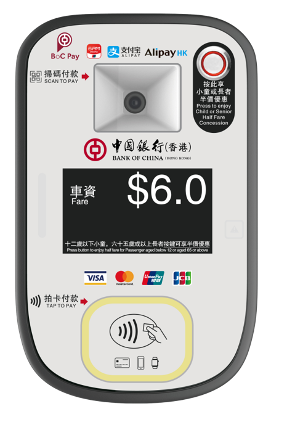
However, with the development of new payment technologies for buses and intelligent bus card machines, the phenomenon of buses receiving counterfeit coins may not last long.
Some bus companies in China have installed intelligent bus validators that support QR code payment on buses to curb the chaos of coinage and encourage passengers to pay by scanning code. This equipment not only eliminates the problem of counterfeit coins when taking the bus but also makes payment more convenient and fast. Passengers only need to pull up the QR code on their phones and then "tap" it in front of the device to pay the fare.
The vigorous promotion of third-party payment institutions is rapidly popularizing QR payment for buses nationwide. In 2017, more than 8,500 buses in Hangzhou equipped with Golong intelligent bus card machines fully realized Alipay scanning code payment and UnionPay QuickPass. According to incomplete statistics, cities such as Mianyang, Yueqing, Pingyang, Tengzhou, and Hangzhou have all realized Alipay scanning code payment for buses. Currently, the popularization of scanning code payment for buses in China will completely eliminate this phenomenon of chaotic boarding.
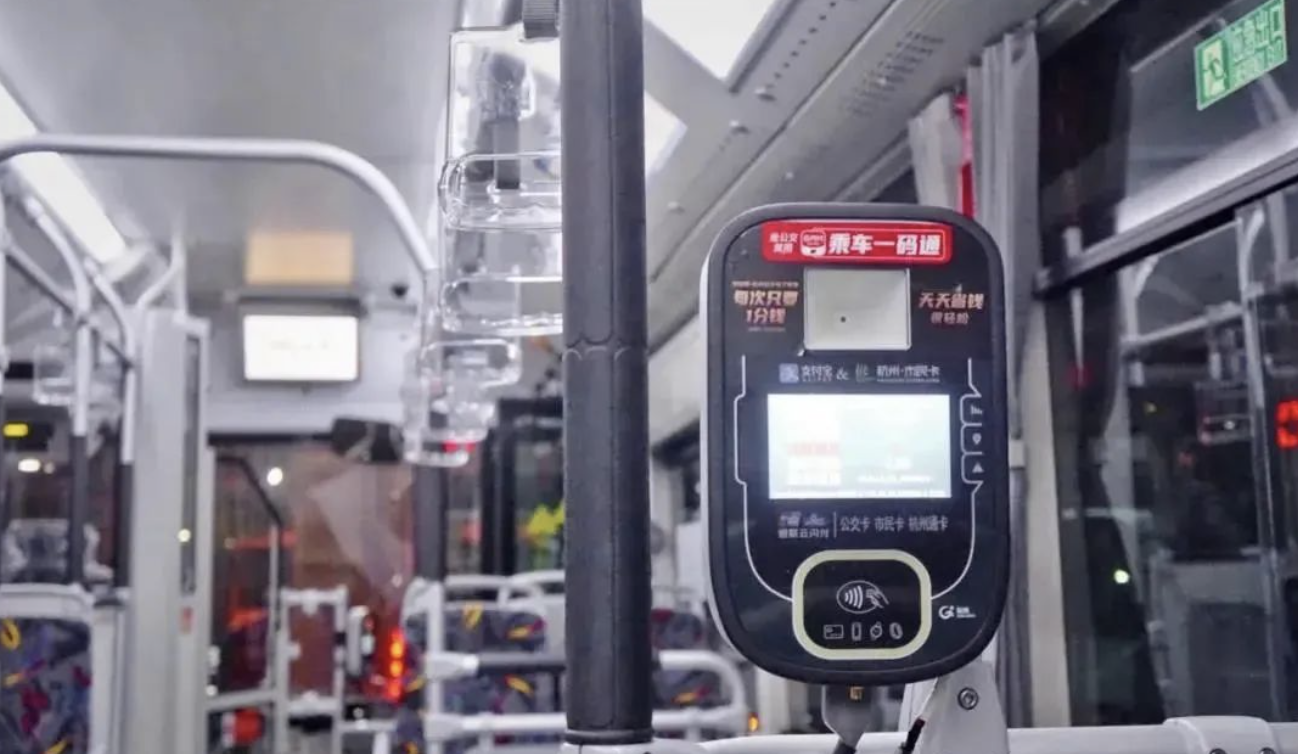
Hangzhou Intelligent Bus Validator
Driven by Internet technology and the development of intelligent bus card machine equipment, QR payment for buses has become a major opportunity for the upgrade of China's bus industry, helping to improve efficiency and reduce risks. In the long run, "Internet & buses" will change the traditional data "isolated island" and information barriers, giving birth to endless digital economic value.