

Background Introduction
Public transportation is a vital social welfare service that plays a sacred role in the economy and social development as the "artery," "window," and "pioneer." With the rapid and comprehensive development of society and the economy, the construction of urban public transportation systems has become a hot and focal point of attention for governments at all levels and all sectors of society.
In recent years, public transport enterprises have encountered unprecedented difficulties, resulting in heavy burdens and struggles, with some even facing suspension of services. The causes of this situation are multifaceted, with common issues including:
- Increasing policy-related losses. As the government places more emphasis on public welfare projects, the public transport enterprises' public service contributions have also increased yearly.
- There is no stable funding channel for construction. Due to a shortage of funds, aging public transport vehicles cannot be updated, and non-profit public transport enterprises face tight funds for the construction and maintenance of public facilities like stations.
- There has been no positive policy inclination, and a series of policies benefiting public transport have not been implemented.
- Public transport enterprises have limited space for independent development and operational planning, while costs continue to rise yearly.
- The impact of the COVID-19 pandemic and diversified transportation has reduced competitiveness, with the share of bus trips decreasing.
- The tidal phenomenon of urban and rural passenger flow, with inadequate handling methods and technology, keeps costs high.
As a public welfare industry, public transport naturally has a gap between income and costs. Additionally, the impact of three years of the pandemic, the interconnected metro networks, private cars, and shared e-bikes has severely reduced public transport passenger volumes. Therefore, reducing costs and increasing efficiency at every step is crucial.
Reducing costs and increasing efficiency is an essential strategy for the survival and development of enterprises. The construction of public transport needs to deepen state-owned enterprise reforms, firmly implement the higher authorities' development strategy of "reducing losses, turning losses into profits, and increasing efficiency," and blaze a new trail for healthy and sustainable enterprise development with the courage for self-revolution. "As a public welfare enterprise, we must not rely on the government; we must reduce costs and increase efficiency to enhance sustainable development capability, laying a solid foundation for the steady development of public transport. Therefore, implementing 'cost reduction and efficiency enhancement' is imperative."
Launching demand-responsive and appointment-based buses in rural areas with small and relatively dispersed travel demands can meet the personalized and diverse service needs of rural groups, achieving real-time sharing and precise matching of travel demand and transport capacity supply information. This includes everyday travel scenarios such as students going to school, people going to markets, and visiting friends and relatives during holidays.
At the same time, it aims to reduce empty runs and increase utilization rates while meeting personalized and diverse needs.
Infrastructure construction can also be applied to the taxi hailing system, handling taxi booking services through equipment.
Based on the current "Village-to-Village" project routes, passenger flow declines significantly during off-peak periods. For remote rural/urban-rural routes, a "Demand Responsive Transport(DRT)" model can be planned and targeted to reduce and lower vehicle trips, enhancing cost reduction and efficiency while ensuring smooth travel for rural residents and reducing empty bus rates. Cost reduction and efficiency enhancement can lower the operating costs of urban and rural bus systems, thereby helping improve sustainability.
- Cost reduction and efficiency enhancement can help reduce the fiscal deficit of urban and rural bus systems, freeing resources for other important areas.
- Building new systems can improve the accuracy of bus, enabling the system to provide more services.
- Cost reduction and efficiency enhancement can reduce exhaust emissions and noise pollution, thereby improving environmental quality in urban and rural areas.
- An optimized urban-rural bus system can reduce the number of private cars, helping to alleviate traffic congestion.
- By improving the efficiency of the public transportation system, it enhances the accessibility for urban and rural residents, especially those without private transportation.
- Improving the attractiveness of public transportation: By providing efficient and high-quality public transport services, people are more likely to use public transport, reducing private car use, carbon emissions, and traffic accidents.
- Lowering the cost of urban and rural buses helps reduce dependence on limited resources, enhancing national energy security.
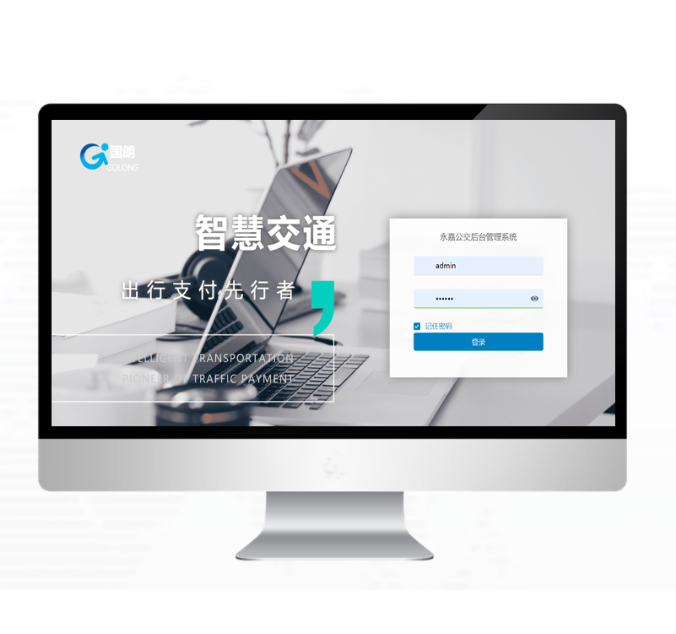
Software Platform Application
- Intelligent booking terminal based on site
- Passengers use existing payment methods of the project to tap cards/scan codes for ticket or trigger the booking mechanism through a button (the booking method can be customized);
- The machine receives passenger transaction data;
- The terminal sends transaction data to the backend communication service program;
- The SaaS platform receives transaction data from the frontend, confirms transaction information;
- Backend transaction data reception results return to the frontend device status;
- The frontend equipment receives the backend transaction data reception success status response, with voice broadcast: "Debited xx yuan, booking successful" (booking method and deduction order can be customized according to business requirements);
- Frontend booking transaction data is stored in the database;


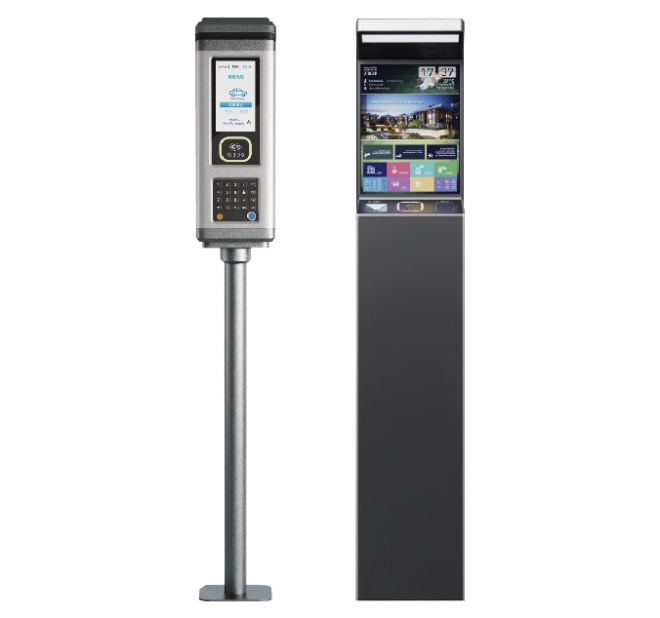
Demand Responsive Transport(DRT)Hardware Products
Customized for booking business scenarios, integrating mobile payment.
Designed for outdoor application scenarios, meeting outdoor use requirements.
Easy installation without excavation, convenient construction.
Use the mainstream Android operating system with a powerful processor, integrating QR code scanning, NFC contactless card reading technology, and support IC card, and financial card payment methods.

Optimized Resource Allocation: Real-time data analysis allows bus stop adjustments based on passenger demand, avoiding ineffective stops and improving bus operation efficiency.
Increased Passenger Satisfaction: Demand Responsive Transport(DRT)solutions can adjust in real-time to meet passenger needs, making travel more convenient and increasing satisfaction.
Energy Saving and Emission Reduction: Reduce unnecessary driving mileage, lowers energy consumption, help reduce carbon emissions, and promote environmental protection and energy saving.
Lower Operating Costs: By reducing ineffective driving and optimizing route planning, operating costs are reduced.
Customized Needs: For rural areas with small and relatively dispersed travel demands, appointment-based and responsive buses can meet personalized service needs, achieving precise matching of travel demand and transport capacity.
Optimized Resource Allocation:Real-time data analysis allows bus stop adjustments based on passenger demand, avoiding ineffective stops and improving bus operation efficiency.
Increased Passenger Satisfaction:The Demand Responsive Transport(DRT)solution adjusts in real-time to meet passenger needs, making travel more convenient and increasing satisfaction.
Energy Saving and Emission Reduction:Reduce unnecessary driving mileage, lowers energy consumption, and help reduce carbon emissions, promoting environmental protection and energy saving.
Lower Operating Costs:By reducing ineffective driving and optimizing route planning, operating costs are reduced.
Customized Needs:In rural areas with limited quantity and dispersed travel demand, a reservation-based, responsive public transit model is adopted to meet the service needs of rural residents, achieving precise matching of travel demand and transport capacity.
Golong Technology:
As a provider of software and hardware system services, Golong Technology is the first company in China to introduce the full payment integrated machine into the public transport sector. Adhering to the vision of providing professional solutions to enhance the efficiency and management level of transportation systems, Golong focuses on innovative technologies and solutions, dedicating itself to smart transportation and smart travel, thereby providing more convenient services for public services.
Market Coverage :Public transport payment has been implemented in more than 170 regions, with rich operating experience
●The main products have been running stably in more than 170 cities such as Hong Kong and Macao.
●The facial recognition payment system is connected to more than 10 cities.

Access City:
including Hong Kong, Macau ,Hangzhou, Suzhou ,Nanning, Qingdao and so on.
Overseas Markets:
Overseas market has docked with Thailand, Singapore, India and other markets, and the development progress for overseas market is in the leading position in the industry.