

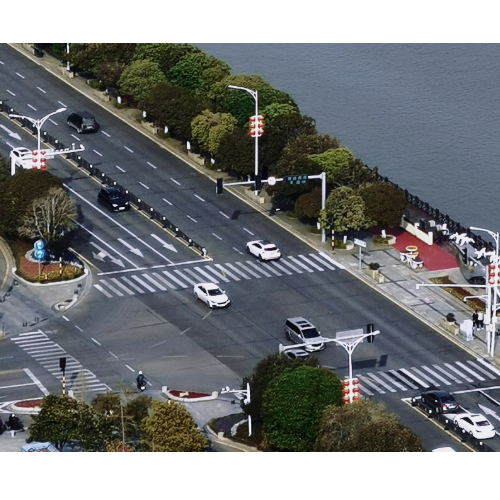
With 40 years of reform and opening up, our country has made significant progress in urbanization and achieved great achievements. However, the contradiction between the convenience of urban life and traffic congestion has become increasingly prominent. We now have more and more private cars, but their occupancy rate is very low, so buses and public transportation have become the preferred choice for urban travel. Among the many modes of transportation, buses still carry the most passengers today, with approximately 200 million trips per day, compared to about 60 million for subways and 130 million for ride-hailing taxis. Advocating for urban bus priority passage, how can customized buses solve the effectiveness of urban travel?
The occupancy rate of buses is gradually decreasing, and the reasons are many pain points in bus travel: first, in terms of perception, most people think that buses are dispensable, surviving on subsidies, a burden for the government, and a welfare for vulnerable groups. Secondly, the bus experience is poor, with unreasonable stops, delays, long wait times, and frequent empty runs, which lead to excessive subsidies once empty runs occur. Measures taken to address this often include canceling trips and routes, resulting in a worse experience and longer wait times, leading to a vicious cycle. Finally, most people switch from buses to driving to work, making traffic more congested and buses waiting longer. This three-tier pain point, these two vicious cycles are nested, becoming increasingly worse. To solve the effectiveness of urban travel, it is best to allocate different road rights to the public transportation system, such as giving buses priority passage. Currently, the rights of buses, whether carrying 60 people or 40 people, are the same as those of a single passenger car. If buses have priority, commuting time is shortened, the experience is better, and everyone will choose to take the bus. As a result, private car commuting decreases, reducing traffic congestion and becoming more environmentally friendly.
There are roughly three ways to prioritize buses. In the past few years, the most common method was physical lane setting, such as BRT. This is a static method, with very low efficiency in road rights allocation and a waste of resources, and is no longer being done. Another method is passive, judging from the outside, by perceiving whether it is a bus, such as reading license plates, but it cannot achieve dynamic road rights allocation. What we have been doing in the past few years is active bus priority, using the latest intelligent connected vehicle technology, where buses actively send requests to traffic lights for priority passage. Thanks to the CV2X national standard, which has millisecond delay, centimeter-level positioning, and beyond-line-of-sight perception, although buses may not be visible when turning corners, the buses have already told you when they will arrive, their speed, acceleration, and whether they are overloaded. The higher the priority when crowded, and the lower the priority when less crowded, buses that are on time do not need priority, and those that are already late do. A crossroads only needs to install one box, without installing cameras in each direction. When it receives a request signal from the onboard OBU, it will judge whether to let the bus go first. A typical example is when a bus arrives at a traffic light and the light is about to turn red, it will wait for the bus to pass before turning red. Due to our wider roads, it takes only two or three minutes to cross an intersection, and if a bus goes through several intersections, it can save 20% of the time. At the same time, the system on the bus also has a deep learning engine that can provide various intelligent driving functions, including passenger counting.
Bus priority is a technology belonging to intelligent transportation, involving smart cities. How to expand it to the entire city-level travel and traffic plan? There are other tasks to be done, such as how to reach every citizen through ubiquitous intelligent interconnection. In November 2021, we and Tencent released a white paper on precision buses, including mini-programs, big data, and mini-program push from Tencent Cloud, which can maximize the public transportation priority technology to the entire city-level smart city transformation.
One typical application is that in the first half of 2021, we customized two bus routes, applying active bus priority systems to customized buses. In fact, compared to private cars commuting according to the map-recommended routes, the average commuting time saved by customized buses with bus priority is 27.5%, and compared to regular buses, the commuting time saved is 30%, and about 24.7% of the passengers who originally traveled by private cars now switch to buses because they are faster with bus priority. This has greatly eased traffic pressure and reduced carbon emissions. According to calculations by the Changsha Low Carbon Center, if all the city's thousands of vehicles are fully retrofitted, annual carbon emissions savings will reach 2.5 million tons. In addition, according to feedback from some passengers, due to bus priority custom buses, the 40-minute commuting time has been reduced to 20 minutes, so they are very happy.
How to implement this whole system? We can proceed step by step. The first step is to customize bus or bus priority single-line transformation, such as core sections or dedicated sections, with about 20 vehicles and 20 intersections, which can be completed in two weeks, very quickly, because there is not much infrastructure investment, it is a flexible dedicated lane. The second step is the overall implementation of the city or most of the area's bus network, comprehensive planning, and then achieve the goal of bus priority travel. The third step is to combine other transportation tools to optimize the low-carbon travel of the entire city's smart transportation, achieving true carbon neutrality.
Where is the value of active bus priority? Many new technologies are often well-received but not well-used, because their value is difficult to calculate, generally long-term value. But the value of bus priority is relatively easy to calculate. We can talk about it from three levels: the first is the fare, we call it the first-order value. It's very simple, if each vehicle saves 20% of the time and attracts one more person to take it for a fare of 2 yuan, the increased revenue is about 36,000 yuan in three years, enough to recoup the investment; if each trip carries five more people, the actual increased revenue is even higher, with a net profit of 140,000 yuan per vehicle. Expanded to the entire city, taking Changsha as an example, it can increase revenue by 1 billion yuan. The second is the carbon price. Currently, our carbon trading has just begun, and the price is relatively low, at 40 yuan per ton. Even at a carbon price of 40 yuan, reducing carbon emissions by 2.5 million tons in the city, we can save 100 million yuan in carbon prices in one year, 300 million yuan in three years, enough to recoup the investment. With the rise in carbon prices, in the next two years, it will reach 200-300 yuan/ton. If we reduce 2.5 million tons of emissions, we can save 750 million yuan in carbon prices in one year, and 2.25 billion yuan in three years, with a net profit of 1.89 billion yuan. This is still very low compared to carbon prices in Europe and the United States. Europe is currently at 71 euros per ton (about 497 yuan), the United States is at 51 US dollars per ton, and California is even more ridiculous, with a carbon price of 200 US dollars per ton. If calculated at the carbon price in California, we will save 500 million US dollars in carbon emissions value per year, which is very considerable.
The third aspect is social value. Every new technology, such as intelligent interconnection and intelligent driving, is actually a revolutionary technology, because it can quickly reach every ordinary person, benefiting the people with technology, making transportation a strong country, new infrastructure, carbon neutrality, and actually has a very important impact on our overall economy and the people's sense of gain. For example, the investment in one kilometer of subway can be exchanged for a comprehensive upgrade of low-carbon travel throughout Changsha, and it can be completed in six months. We know that subway operations are low-carbon, but subway construction is high-carbon, taking 15 years to break even.
- Passengers can check real-time bus information anytime, anywhere through the bus app.
- Passengers can know the location of the bus in real time through on-board GPS.
- Support various ways to display the real-time location of the bus, such as text, and map.
- Support setting arrival and take-off reminders to prevent people from missing the vehicle.
- Provide interactive information on subway and public bicycles at the station, so that people can get around easily.