

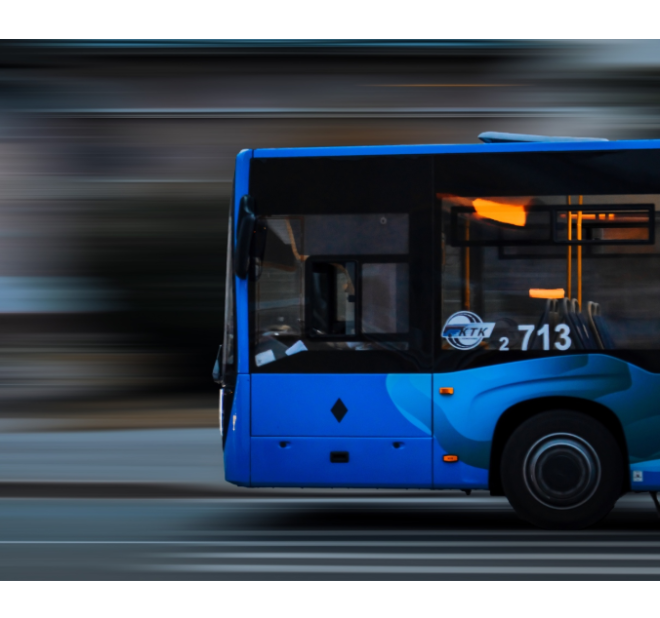
With the increasing popularity of mobile payment in Hangzhou, more and more citizens have gradually become accustomed to a cashless life. As a model city for mobile payment, Hangzhou has now realized mobile payment in buses, which means that it is a leading city of mobile payment in China.
At first, people had to buy tickets. Then, fare boxes and bus IC cards were used to pay for the fare. Now, people can use Alipay and UnionPay cards. In the past, bus companies had to dispatch stations and routes manually. In contrast, they can use big data platforms. Therefore, Hangzhou buses are getting smarter and smarter. Wu Cunqian, deputy director of the Institute of Strategic Development of Hangzhou Bus Group, said that the “carriage revolution” of Hangzhou Bus Group has made it more and more convenient for people to travel.
Mobile payment is up to average of 170,000 transactions per day
“There are about 3.9 million people who take the bus every day in Hangzhou. Tapping bus cards has become a part of their daily life.” Wu Cunqian said, there are also problems in the process of using the bus card, such as inconvenient recharge, and easy loss. Furthermore, the tapping records can not be viewed. Besides that, the cards cannot be used in other regions. If the bus card can be like mobile phone payment, or bank card payment, it will become more convenient.
In August 2016, Hangzhou Bus Group cooperated with Ant Group (Alipay), and China UnionPay Zhejiang Branch to provide passengers with mobile payment methods such as Alipay and UnionPay. At first, Golong’s on-board All-in-one Payment Bus Validators were equipped on 20 buses of 506 Route for pilot. The passengers thought highly of the machine. By the end of August this year, more than 8,000 buses on 750 bus routes in Hangzhou had installed Golong's on-board All-in-one Payment Bus Validators. All passengers can use Alipay QR and UnionPay. The number of Hangzhou bus cards in Alipay exceeded 1.8 million. The average daily transaction of mobile payments reached 170,000. The maximum number of QR code scanning is up to 350,000 per day, and the maximum number of using UnionPay is 120,000 per day.
“Previously, there were about 1.7 million cash of change every day, which accounted for about 48% of the amount of the bus fare. The use of change has dropped by more than 20% because of AliPay.” Wu Cunqian said that the integration of bus mobile payment is not only convenient for passengers to travel, but also reduces the cost of bus companies to count change, and improves the operational efficiency of companies.
There are three large screens at the Hangzhou Bus Command Center on the fourth floor of the Hangzhou Bus Group. Wu Cunqian described the screens as the ‘smart brain’ of Hangzhou Bus. The situation of 28454 bus stops, 11128.6 kilometers of route information, real-time road traffic information, and the operation of more than 8,000 buses in Hangzhou can be seen at a glance and monitored in real time in front of the three screens. Previously, data reference dispatch replaced the manual dispatch gradually. Nowadays, big data and cloud computing can be used to dispatch buses. There are more than 8,000 buses that have been equipped with “smart brains” in Hangzhou, which will bring great changes to Hangzhou buses. The buses will become more smart, scientific, and safe. At the same time, people can travel more conveniently.