

Is Customized Bus Service an Upgraded Version of Ride-Hailing? Can It Become the First Choice for Public Travel?
Since the operation of Beijing's first customized bus service (also known as business customized shuttle) in September 2013, the number of routes and trips has been steadily increasing. This mode of transportation has also encouraged other cities to launch or plan to introduce customized bus services. This "special product" in the bus sector has not only caused a stir in many large and medium-sized cities in China but also attracted the attention of bus manufacturers. Some bus companies have launched customized bus products to meet new market demands or are considering exploring this market. With the continuous expansion of market demand, will the small spark of customized buses develop into a widespread trend?
Around 2014, as Beijing subway and bus services considered fare increases and the prices of fuel and parking remained high, many people became frustrated with the crowded conditions during rush hours or the incessant honking on congested roads. For some passengers, online booking, on-demand departure, internet access, charging facilities, and the convenience of dedicated bus lanes were highly attractive. Thus, many chose "customized travel" over driving cars or taking subways and buses.
The Rise of "Exclusive Customized" Demand in Bus Services
On September 4, 2013, Beijing Public Transport Group unveiled 12-meter tourist buses, 10-meter short front-overhang buses, and 8-meter tourist buses for customized routes. These existing models, originally tourist or long-distance buses, are considered transitional. As market demand grows, existing models will inevitably be modified to meet new usage characteristics. Li Lifeng, Deputy Director of the Publicity Department of Beijing Public Transport Group, revealed that manufacturers would be required to provide vehicles suitable for business shuttle operations.
On November 4, 2013, the customized bus service from Guanzhuang Yuanyang Yifang to Financial Street began operation. Due to high demand, a 59-seater bus was used for the first time on this route. Previously, the routes used 10-meter business buses with 26-30 seats and 8-meter business buses with 29 seats. The varying travel needs and fluctuating passenger numbers on different routes have highlighted the unique demands for customized bus models.
Beijing Public Transport Group plans to create differentiated customized bus lines distinct from regular bus services. On January 21, a vote on the Beijing Public Transport website initiated the selection of customized business bus models, with four bus companies participating. According to Beijing Public Transport's requirements, new models will range from 8 meters to 12 meters. For convenience, the new buses will feature double-step structures and double outward-opening doors to facilitate passenger boarding and alighting. In terms of comfort, the buses will have wide adjustable seats with ample spacing. The power units will include automatic transmissions and advanced systems, prioritizing LNG clean energy engines. Additionally, the buses will be equipped with full-matrix LED electronic signboards, video surveillance systems, onboard TVs, GPS, voice communication, and other electronic information facilities. The four companies will design their models based on these specifications.
Currently, Beijing Public Transport Group has opened 44 customized business bus routes, with 32 more in the pipeline. Li Lifeng disclosed that due to the continuous emergence of new booking demands, customized bus services are steadily growing.
Similarly, Qingdao Jiaoyun Group, which has already launched customized bus services, indicated that with the expansion of routes, bus models would also change accordingly.
Challenges and Skepticism Regarding New Market Segmentation
Despite the noticeable growth, industry experts believe that customized bus services are insufficient to constitute a new market segment. She Zhenqing, Deputy Secretary-General of the Bus Branch of the China Highway Society, stated that although customized buses are developing well, they do not significantly boost bus market sales but provide some help. "Customized buses benefit commuters living far from their workplaces but also curb the growth of corporate shuttles and short-distance passenger buses. The overall market and bus companies' growth due to the uncertainty of customized buses."
She Zhenqing noted that group bus users are valuable resources for bus companies, and their shift to public transport companies does not significantly change the volume. "The future development of customized buses will not drastically alter the industry structure. Their increase primarily serves as a 'substitution,' inhibiting the demand for group buses and short-distance passenger transport, potentially leading to the rapid decline of short-distance passenger transport. The extent of this substitution's impact on market growth remains unclear."
Li Dusheng, Director of Zhongtong Bus Brand Department, also expressed that while customized buses represent new market demand, they do not bring new growth to the entire industry. The increase in customized bus vehicles may lead to a decrease in group charter buses, carving out a portion of the group and long-distance bus market. Customized buses are a structural change in demand for public and group shuttle services. Companies should anticipate market changes and adjust their products accordingly to maintain an advantage. Currently, the trend of customized bus development looks promising.
She Zhenqing explained that similar products existed before, such as the Multi-Purpose Bus (MPB) launched by Dandong Yellow Sea, designed for suburban transport, government shuttles, group transport, long-distance and intercity transport, and tourism charters. Today's customized buses add personalized features like internet connectivity. Despite the positive development of customized buses, they are unlikely to emerge as a distinct category in the bus industry, remaining a product between public and highway buses. Over the decades, only two significant changes have occurred in the bus sector: sleeper buses and school buses. Customized buses are unlikely to bring a "third change" as they are still essentially public buses with more seating and no standing areas.
Experts Optimistic About Future Development
At the 2013 China Bus Academic Annual Conference, Professor Chen Yinsan of Chang'an University described customized buses as a public transportation service mode between conventional buses and taxis. The long-standing single service mode of public transport, constrained by low fares, finally has a breakthrough. Professor Wang Jian of Chongqing Jiaotong University identified customized buses as a "demand-responsive mode" catering to specific passenger needs.
Experts are generally optimistic about the current development trend. Industry insiders believe that customized bus passengers primarily comprise private car owners and taxi users, replacing their original commuting methods. Therefore, the "substitution effect" does not replace short-distance bus or public transport passengers but introduces new growth. These passengers may promote the development of customized buses. While it is uncertain if customized buses will create a new market segment, they certainly encourage public transport companies to provide differentiated services for various passengers.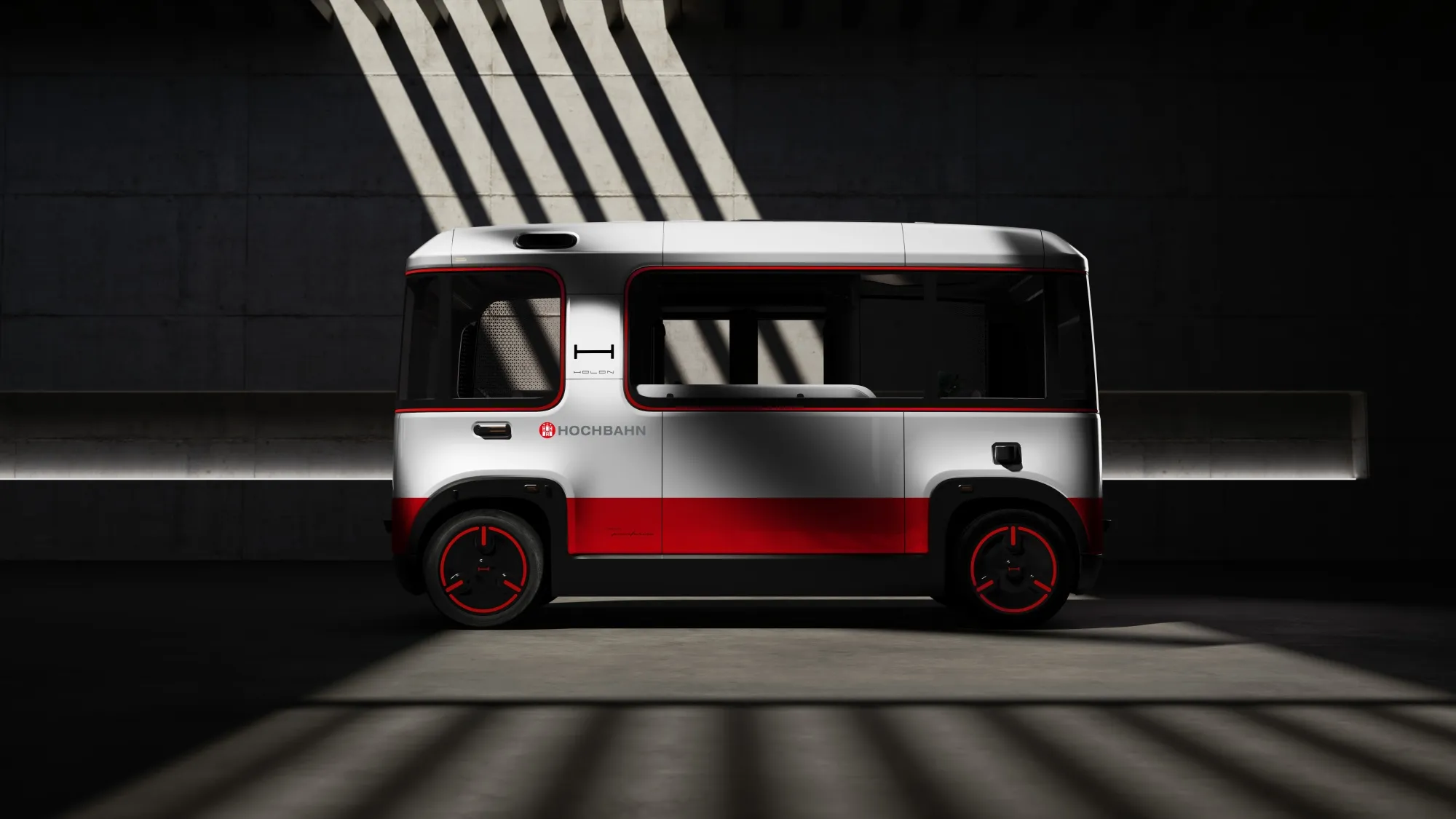
The Holon Mover, a small self-driving bus, is set to make its European debut when it enters service in Hamburg.Source: Holon