

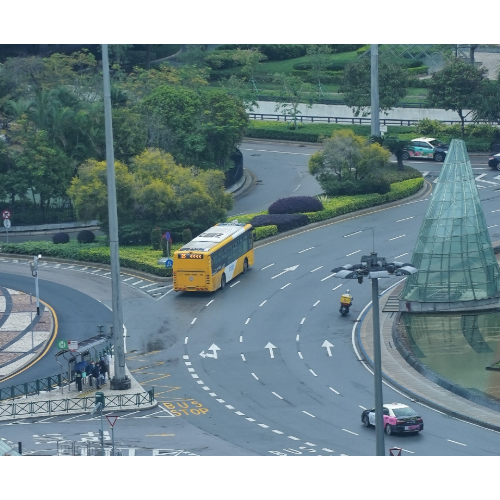
Since the first customized bus (also known as business customized shuttle) started operating in Beijing in September 2013, the number of operating routes and trips has been continuously increasing. At the same time, this mode of transportation has also led other cities to successively introduce customized buses or put them on the agenda. After the launch of this "special product" in the field of public transportation, it has not only caused a stir in many large and medium-sized cities in China but also attracted the attention of bus companies. Some bus companies have introduced customized bus products in response to new market demands, or are considering expanding into this market. So, with the continuous expansion of market demand, will the spark of customized buses develop into a widespread trend?
Around 2014, Beijing's subway and bus systems were considering fare increases. With high fuel prices and parking fees, are you tired of the days of squeezing in the subway or bus during rush hours, or being stuck in traffic honking your horn? For some passengers, the convenience of online booking, on-demand departure, surfing the internet and charging while napping on the bus, and the quick access to dedicated bus lanes, are very attractive. As a result, many people have chosen "customized travel" over driving or squeezing into the subway or bus.
Exclusive customization demand from bus groups quietly rises
On September 4, 2013, the 12-meter tourist bus, 10-meter short front suspension bus, and 8-meter tourist bus used on the customized bus routes of the Beijing Bus Group were officially unveiled. It is understood that the existing customized bus models use tourist buses or long-distance buses, which are transitional models. With the continuous expansion of market demand, existing models will inevitably be transformed to meet the new usage characteristics. Li Lifeng, Deputy Minister of the Propaganda Department of the Beijing Public Transport Group, once revealed that manufacturers will be required to provide vehicles suitable for the operation of business shuttle buses.
On November 4, 2013, the customized bus from Guanzhuang Ocean One to Financial Street in Beijing started operating, and due to the popularity of the Financial Street route, the line used a large bus model with 59 seats for the first time. Previously, it was a 10-meter short front suspension business shuttle bus with 26 to 30 seats and an 8-meter business shuttle bus with 29 seats. With the continuous changes in travel demand and the increase or decrease in the number of passengers on different routes, the demand for customized buses in Beijing is increasingly showing its uniqueness.
It is reported that the Beijing Public Transport Group has initiated a plan to create differentiated customized bus routes different from ordinary buses. On January 21 this year, a vote on selecting the design of customized business shuttle buses was officially launched on the Beijing public transport website, with four bus companies participating in the design selection. According to the requirements of the Beijing Public Transport Group, the new models may adopt 8-meter, 10-meter, and 12-meter series models. In terms of convenience, the new vehicles will prioritize the use of a two-step structure, with double outward-opening doors to improve passenger boarding and alighting efficiency. In terms of comfort, the interior seats will be large and adjustable, with spacious seat spacing. In terms of powertrain, they will need to be equipped with automatic transmissions and advanced powertrain systems, and give priority to the use of LNG clean energy engines. In terms of special facilities, they will use full-dot matrix LED electronic signs, video surveillance systems, onboard TVs, GPS positioning, voice communication, TDFI, and other electronic information facilities. The four companies will also design their models based on these requirements.
Currently, the Beijing Public Transport Group has opened 44 customized business shuttle bus routes, and 32 routes are still under solicitation. Li Lifeng revealed that due to the continuous emergence of new booking demands, the current situation shows that customized buses are showing a stable growth trend.
It is reported that the Qingdao Transport Group, which has already launched customized bus services, also stated that as the customized bus routes continue to expand, the bus models will also change accordingly.
定制公交恐不能成为新细分市场
Customized buses may not become a new segmented market
Although the increment is obvious, industry experts believe that customized buses are not yet enough to constitute a new segmented market. She Zhenqing, Deputy Secretary-General of the Client Bus Branch of the China Highway Society, believes that although customized buses are developing well, they cannot drive the increase in bus sales at the moment, only providing some assistance. "On the one hand, customized buses are beneficial for commuting people living far from work, but on the other hand, they also suppress the growth of corporate shuttle buses and short-distance passenger transport vehicles. It is still difficult to determine how much increment there will be for the entire market and bus companies."
She Zhenqing believes that group bus group users are very high-quality resources for bus companies, and the shift of these customers to public transportation companies has not resulted in significant changes in volume for bus companies. "The future development of customized buses will not bring about major changes in the industry structure. Its increase essentially plays a 'substitute role', suppressing the demand for group buses and short-distance passenger transport, and even causing rapid decline in short-distance passenger transport. It is still difficult to judge how much increment this 'substitute role' will ultimately bring to the market." She Zhenqing said.
Li Dusheng, Brand Director of Zhongtong Bus, also stated that although customized buses are a new market demand, they cannot bring new growth to the entire industry. With the increase in customized buses, the number of corresponding group charter buses may decrease, so it is a piece of cake cut out from the group charter bus and long-distance bus market. Customized buses are based on structural changes in bus companies and group shuttle bus demand. As an enterprise, it should have foresight, grasp market changes, and adjust products in a timely manner to maintain advantages in the changing market demand. This is the starting point for planning products for enterprises. From the current perspective, the development trend of customized buses is still relatively good.
She Zhenqing stated that similar products to customized buses have existed before. For example, the MPB (Multi-Purpose Bus) previously launched by Dandong Yellow Sea was positioned as a multi-functional vehicle, designed for personalized demands such as suburban passenger transport, government shuttle buses, group passenger transport, inter-city passenger transport for short and medium distances, and tourist charter. Today's specialized customized buses are based on this foundation and have added personalized demands such as the internet. Although the development of customized buses is good now, they will not appear as a separate category in the bus field but rather as a product between buses and highway vehicles. She Zhenqing emphasized that there have only been two significant changes in the categories of buses over the decades, namely sleeper buses and school buses. Judging from current demands, customized buses are unlikely to bring about a "third change." "After all, customized buses are still a type of bus, just leaning towards seated buses, without standing areas, and their purpose is still the same as that of buses." She Zhenqing said.
Experts are optimistic about the development trend.
Professor Chen Yisan of Chang'an University stated at the 2013 China Bus Academic Annual Conference that customized buses belong to a public transportation service model between regular buses and taxis. Bus companies have long been constrained by low fares, and the single service model of regular buses has finally found a breakthrough window. Professor Wang Jian of Chongqing Jiaotong University's School of Transportation defines customized buses as a "demand-response mode," which caters to the specific travel needs of some passengers.
Regarding the current development trend, experts generally express optimism, and industry insiders believe that passengers riding customized buses are mainly private car owners and taxi passengers, who use customized buses to replace their original commuting methods. Therefore, from this perspective, the "substitute effect" does not replace passengers traveling by short-distance buses or public transportation but brings new increments. So, this part of passengers may play a certain role in promoting the development of customized buses. Whether customized buses can bring about a new segmented market is still uncertain, but it is worth affirming that they provide differentiated services for different passengers for bus companies.
"One-Click Reservation, Instant Response" Service
Responsive Bus Solution Background Introduction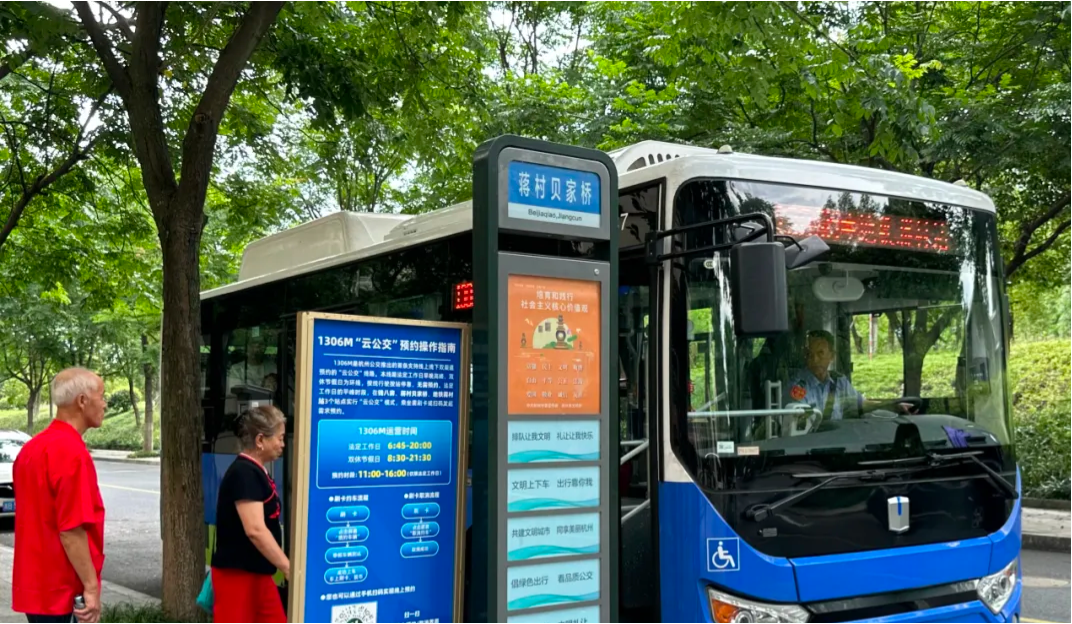
Public transportation is a vital social welfare service that plays a sacred role in the economy and social development as the "artery," "window," and "pioneer." With the rapid and comprehensive development of society and the economy, the construction of urban public transportation systems has become a hot and focal point of attention for governments at all levels and all sectors of society.
In recent years, public transport enterprises have encountered unprecedented difficulties, resulting in heavy burdens and struggles, with some even facing suspension of services. The causes of this situation are multifaceted, with common issues including:
●Increasing policy-related losses. As the government places more emphasis on public welfare projects, the public transport enterprises' public service contributions have also increased yearly.
●There is no stable funding channel for construction. Due to a shortage of funds, aging public transport vehicles cannot be updated, and non-profit public transport enterprises face tight funds for the construction and maintenance of public facilities like stations.
●There has been no positive policy inclination, and a series of policies benefiting public transport have not been implemented.
●Public transport enterprises have limited space for independent development and operational planning, while costs continue to rise yearly.
●The impact of the COVID-19 pandemic and diversified transportation has reduced competitiveness, with the share of bus trips decreasing.
●The tidal phenomenon of urban and rural passenger flow, with inadequate handling methods and technology, keeps costs high.As a public welfare industry, public transport naturally has a gap between income and costs. Additionally, the impact of three years of the pandemic, the interconnected metro networks, private cars, and shared e-bikes has severely reduced public transport passenger volumes. Therefore, reducing costs and increasing efficiency at every step is crucial.

Reducing costs and increasing efficiency is an essential strategy for the survival and development of enterprises. The construction of public transport needs to deepen state-owned enterprise reforms, firmly implement the higher authorities' development strategy of "reducing losses, turning losses into profits, and increasing efficiency," and blaze a new trail for healthy and sustainable enterprise development with the courage for self-revolution. "As a public welfare enterprise, we must not rely on the government; we must reduce costs and increase efficiency to enhance sustainable development capability, laying a solid foundation for the steady development of public transport. Therefore, implementing 'cost reduction and efficiency enhancement' is imperative."
Launching demand-responsive and appointment-based buses in rural areas with small and relatively dispersed travel demands can meet the personalized and diverse service needs of rural groups, achieving real-time sharing and precise matching of travel demand and transport capacity supply information. This includes everyday travel scenarios such as students going to school, people going to markets, and visiting friends and relatives during holidays. At the same time, it aims to reduce empty runs and increase utilization rates while meeting personalized and diverse needs.
Infrastructure construction can also be applied to the taxi hailing system, handling taxi booking services through equipment.
Based on the current "Village-to-Village" project routes, passenger flow declines significantly during off-peak periods. For remote rural/urban-rural routes, a "responsive bus" model can be planned and targeted to reduce and lower vehicle trips, enhancing cost reduction and efficiency while ensuring smooth travel for rural residents and reducing empty bus rates. Cost reduction and efficiency enhancement can lower the operating costs of urban and rural bus systems, thereby helping improve sustainability.
●Cost reduction and efficiency enhancement can help reduce the fiscal deficit of urban and rural bus systems, freeing resources for other important areas.
Building new systems can improve the accuracy of bus, enabling the system to provide more services.
●Cost reduction and efficiency enhancement can reduce exhaust emissions and noise pollution, thereby improving environmental quality in urban and rural areas.An optimized urban-rural bus system can reduce the number of private cars, helping to alleviate traffic congestion.
●By improving the efficiency of the public transportation system, it enhances the accessibility for urban and rural residents, especially those without private transportation.
Improving the attractiveness of public transportation: By providing efficient and high-quality public transport services, people are more likely to use public transport, reducing private car use, carbon emissions, and traffic accidents.
●Lowering the cost of urban and rural buses helps reduce dependence on limited resources, enhancing national energy security.
Software Platform Application
Intelligent booking terminal based on site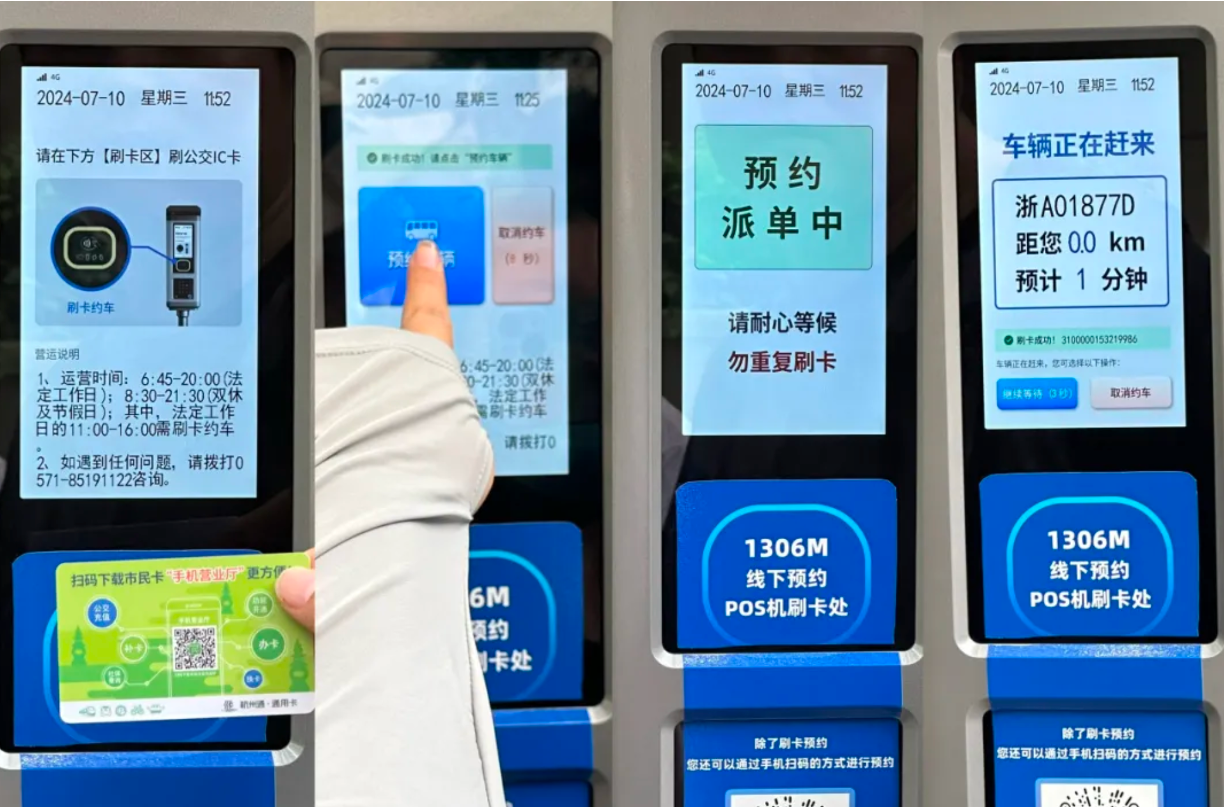
●Passengers use existing payment methods of the project to tap cards/scan codes for ticket or trigger the booking mechanism through a button (the booking method can be customized);
●The machine receives passenger transaction data,The terminal sends transaction data to the backend communication service program.The SaaS platform receives transaction data from the frontend, confirms transaction information;
●Backend transaction data reception results return to the frontend device status;
The frontend equipment receives the backend transaction data reception success status response, with voice broadcast: "Debited xx yuan, booking successful" (booking method and deduction order can be customized according to business requirements).Frontend booking transaction data is stored in the database;
Responsive Bus:
●Passengers complete booking needs through intelligent terminals
●Prepay for booking
●Use credit points for booking
●Voice prompt for booking result
●Page prompt of booking result
●Real-time interaction of booking information
●Periodic synchronization of data information
●Real-time upload of transaction data
●File information interaction processing
Golong WEB management platform regularly (time tentatively set to 30 seconds) retrieves the database transaction status.The WEB management platform provided by Golong, retrieves booking payment transaction records and pops up information records of bookings on the WEB management platform, including: booking site, route, fare, number of people, etc.Public transport dispatch backend personnel notify the relevant route drivers based on the information from the WEB management platform and their dispatch system.Drivers receive notification information from backend dispatch personnel and arrive at the designated site.
Vehicle arrival verification process: Drivers receive notification instructions from the backend dispatch system and arrive at the designated site.Passengers scan codes/tap cards again upon boarding.
Transaction data sent to backend communication service,Backend communication service parses and stores data.Golong WEB management service platform outputs booking reports and statistical reports;
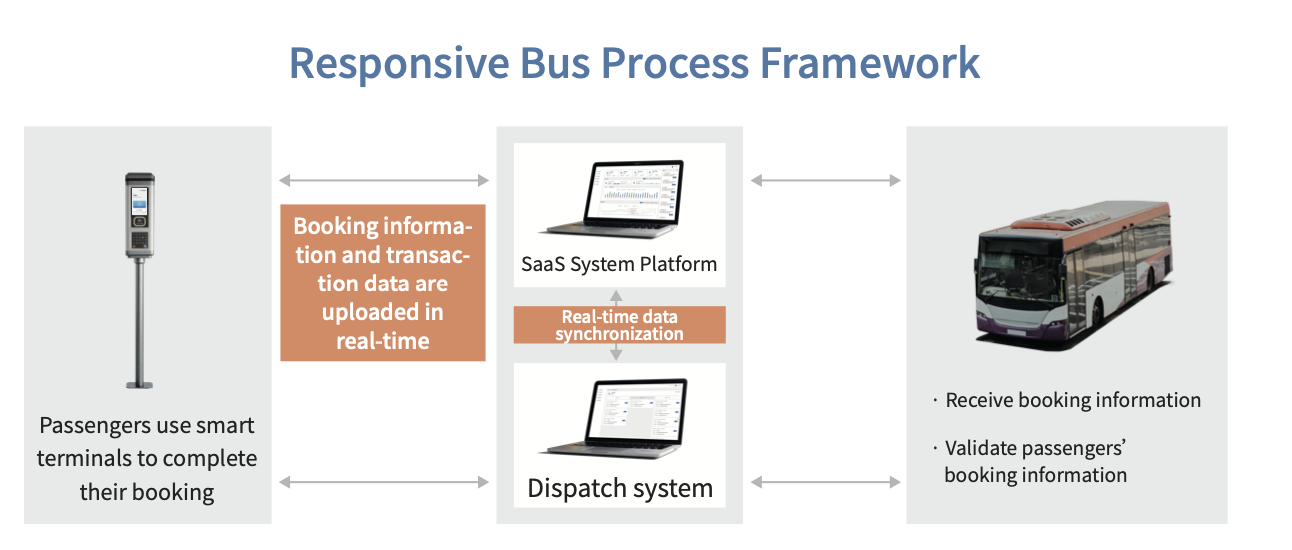
SaaS System Platform:
1.Real-time synchronization of data status:Dispatch system
2.Receive booking information from the dispatch system
3.Arrive at the booking site
4.Cancel passenger booking information
5.Real-time upload of data
6.Operational Dispatch Management:Achieve centralized dispatch of buses and real-time and monitored management of data
7.Real-time positioning
8.Video monitoring
9.Booking reminders
10.Assessment management
11.On-time departure
Optimized Resource Allocation:Real-time data analysis allows bus stop adjustments based on passenger demand, avoiding ineffective stops and improving bus operation efficiency.
Increased Passenger Satisfaction:The responsive bus solution adjusts in real-time to meet passenger needs, making travel more convenient and increasing satisfaction.
Energy Saving and Emission Reduction:Reduce unnecessary driving mileage, lowers energy consumption, and help reduce carbon emissions, promoting environmental protection and energy saving.
Lower Operating Costs:By reducing ineffective driving and optimizing route planning, operating costs are reduced.
Customized Needs:In rural areas with limited quantity and dispersed travel demand, a reservation-based, responsive public transit model is adopted to meet the service needs of rural residents, achieving precise matching of travel demand and transport capacity.
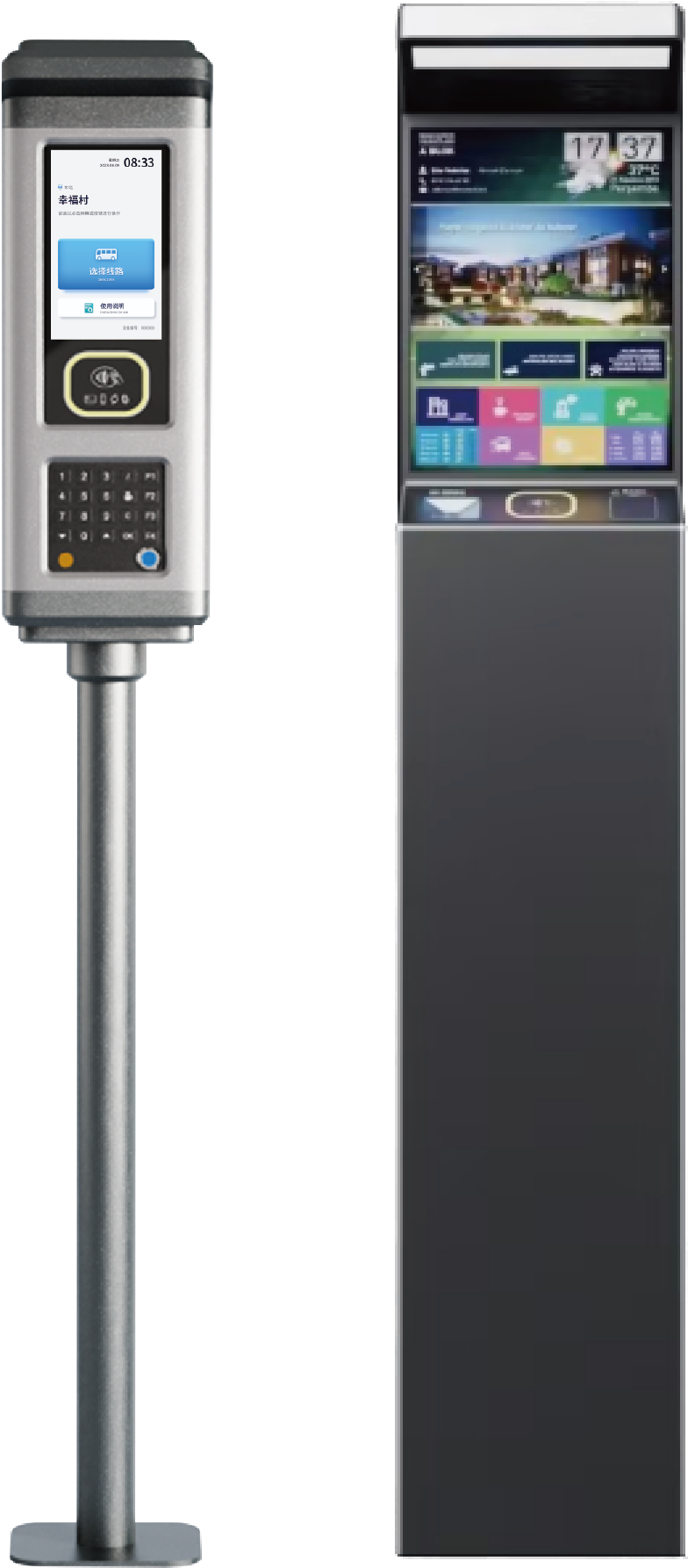

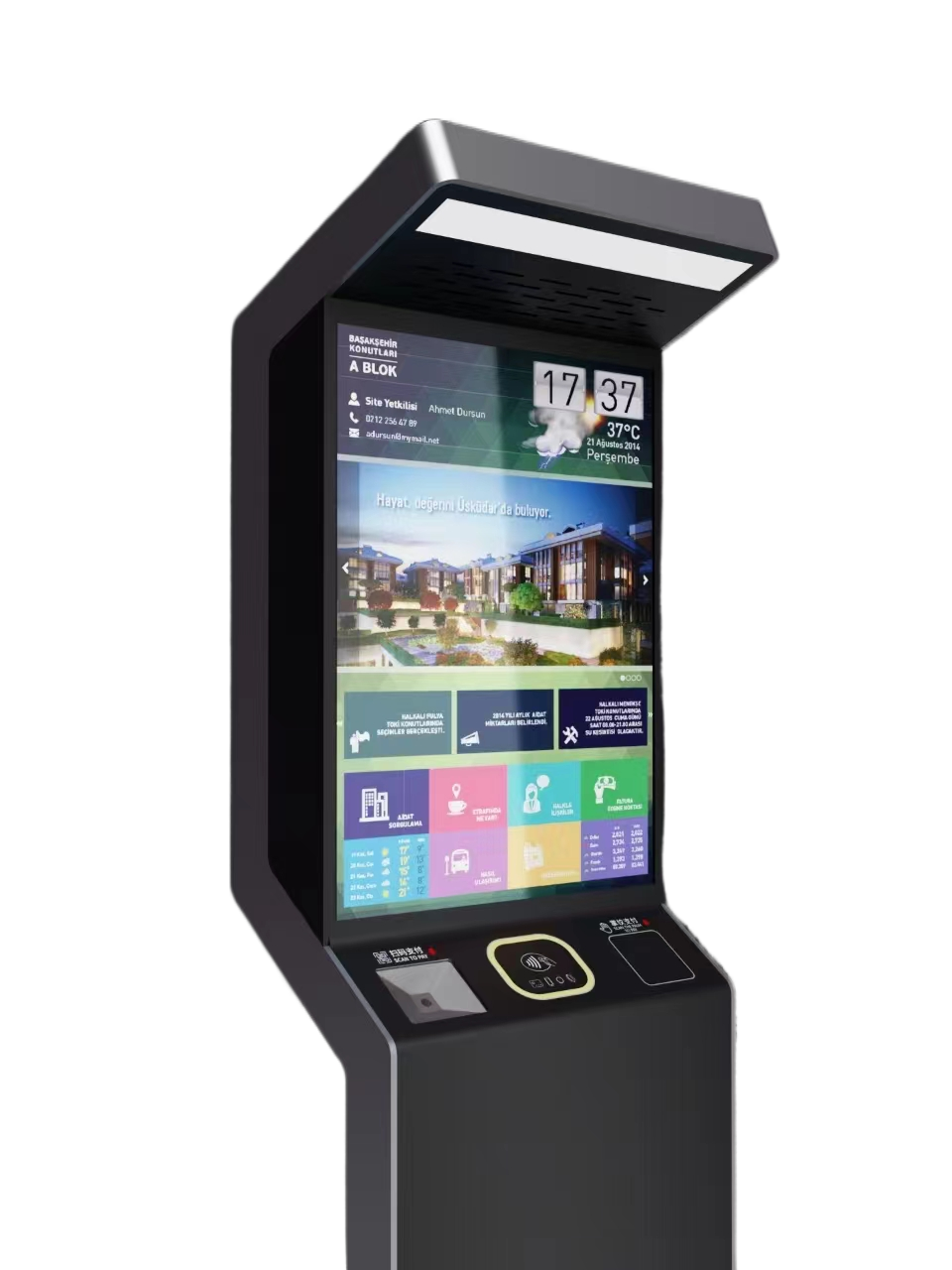
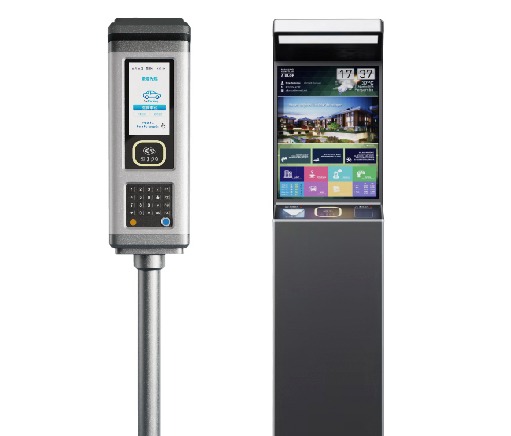
Hardware Products:Intelligent Booking Terminal
1.Customized for booking business scenarios, integrating mobile payment and QR code scanning.
2.Designed for outdoor application scenarios, meeting outdoor use requirements.
3.Use mains power input, with the option to add battery power mode.
4.Easy installation without excavation, making construction convenient.
5.Based on the Android operating system with a powerful processor, it integrates QR code scanning, NFC technology, and support IC card, financial card payment and more.