

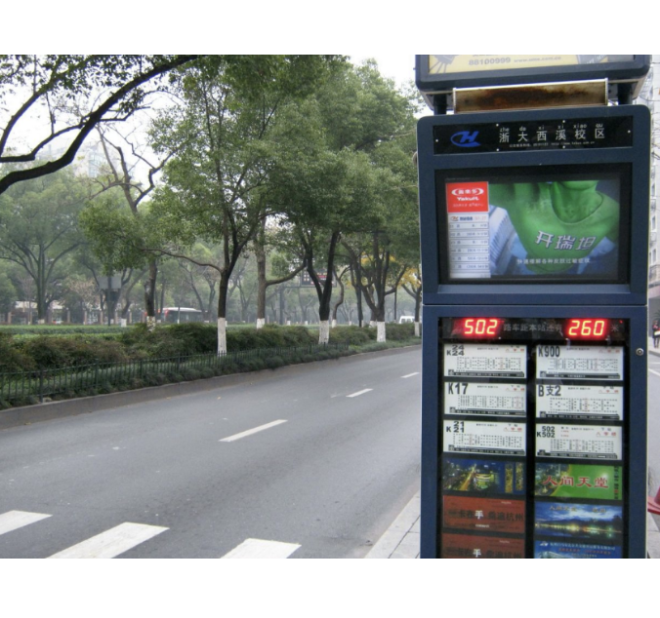
These boards use GPS, Beidou positioning technology, wired or wireless communication technology, and GIS geographic information systems to monitor bus routes and vehicles in real-time, improving vehicle utilization rates and enhancing safety through comprehensive video surveillance systems.
History
2003: Introduction of LED electronic boards
2004: Introduction of LED electronic boards
2006: Introduction of LED electronic boards
2008: Start smart construction
2015: Begin using 55-inch LCD electronic signboards
Let's review the development history of bus electronic signboards.
The first electronic signboard was actually installed on Chang'an Street in Beijing around 2003. It had a triangular design and primarily used LEDs for information display.In 2004, Shanghai introduced LCD electronic signboards, featuring 32-inch screens that used Oriental Pearl's broadcast signal for transmission.By 2006, a large number of electronic signboards were installed in Hangzhou, featuring 32-inch screens combined with some announcement forms, with around 600 units in the city.In 2008, Suzhou began mass construction of electronic signboards, mainly using LED technology.After 2013, with the emergence of high-brightness displays, cities like Lanzhou started using high-brightness screens combined with small vehicle screens for their electronic signboards.In 2015, the size of LCD electronic signboards gradually increased, with 55-inch high-brightness displays becoming mainstream. Weihai installed six to seven hundred of these electronic signboards, serving as a typical example.
Over the past decade, electronic signboards have garnered increasing attention from both citizens and the government. They not only facilitate convenience but also enhance the city's image, gradually becoming a standard feature in urban public facilities.
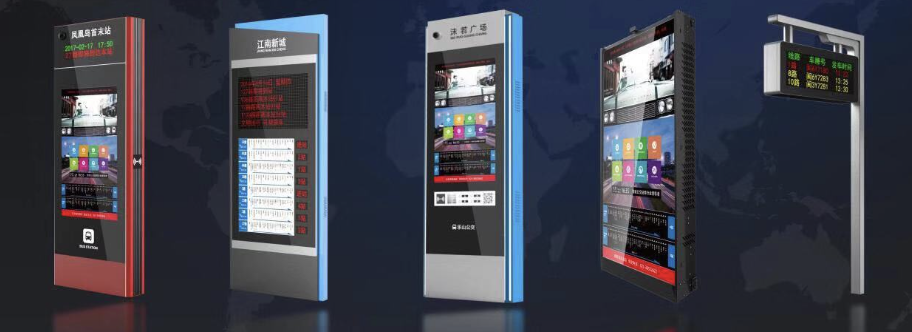
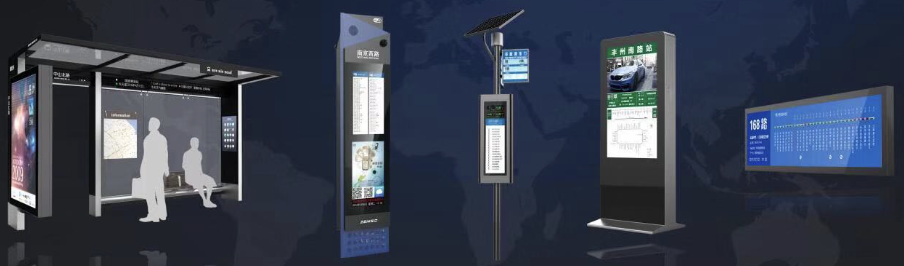
Currently, there are ten series of electronic signboards:
- LCD electronic signboards
- LED electronic signboards
- Interactive electronic signboards
- Embedded electronic signboards, which can be integrated into existing bus shelters
- Hanging electronic signboards
- Integrated bus shelter electronic signboards
- Special-shaped electronic signboards, such as three-sided ones
- Solar-powered electronic signboards
- BRT dedicated electronic signboards
- In-vehicle station display boards
Where will electronic signboards head in the future? Here are some predictions.
The main development directions will focus on solving current pain points of electronic signboards and incorporating new technologies. These pain points include the reliability of outdoor products, announcement accuracy, cost, power supply, and maintenance services.
We believe the size of electronic signboard displays will gradually increase. Currently, 55-inch screens are mainstream, but the cost difference between 65-inch and 55-inch screens is narrowing. Larger screens provide better display effects, allowing for clearer text.
Previously, outdoor touch screens typically used resistive or infrared screens, which were easily disturbed in outdoor conditions and thus unsuitable. However, with recent technological advancements, new technologies like capacitive nano-film touch screens have emerged. These are widely applicable in outdoor environments as they are not easily disturbed by external factors, making touch-enabled electronic signboards a trend.

- Multi-Functional Large Screens
- Real-time station announcements
- TTS voice announcements
- IC card recharge and supplementary registration
- WiFi
Passenger complaint hotlines - Battery charging
- LCD information remote release
- RFID-assisted positioning
- surrounding commercial information release
- NFC payment
- Glass breakage alarm
- Dynamic advertising lightboxes
- LED information remote release
- Full-state fault detection
- Temperature control and heat dissipation
- Automatic dehumidification
- Monitoring
- Real-time video surveillance
- Power outage warnings
那么下一个趋势我们非常看重,就是现在电子站牌的一个痛点,接电,大家都知道城市建设好了,你想接电,像前面电子站牌的功耗比如说二三百瓦,他必须接24小时电,那24小时电是很难的,可能接电成本比一个电子站牌本身的成本还高。
One major pain point of electronic signboards is power supply. Typically, they require a 24-hour power connection with a consumption of 200-300 watts, making the cost of connecting power sometimes higher than the signboard itself.
所以说我们接下来趋势是几种供电的方式:
Future trends include several power supply methods:
第一种是,采用路灯+蓄电池供电模式。这种技术在几年前可能行不通,因为本身他的功耗太多,另外一方面每个路灯所承载的电流电压有一定的范围。所以还要给电子站牌供电,行得通。但是随着现在技术的发展,我们现在对于功耗可以做到原来的三分之二,把功耗降低,比如采用全天候屏或者是采用一些低功耗的一种技术。
Using street lights combined with batteries. This was previously impractical due to high power consumption and limited voltage and current capacity of street lights. However, with technological advancements, power consumption can now be reduced to two-thirds of the original, making this approach viable.
LCD液显屏+小车屏
LCD + Small Screens
OLED屏
OLED Screens
电子墨水屏
Electronic Ink Screens
另外更重要的是我们采用太阳能供电,那么我们看一下几个太阳能电子站牌的模式,这是我们现在采用的三种模式,第一种叫液显屏,就是以前的计算器或者出租车计价器上面这种屏,把他做大进行低功耗的电子站牌,他的功能可能只有不到5瓦。
Another crucial aspect is our use of solar power. Let's look at several models of solar-powered electronic signboards currently in use. The first model is the liquid crystal display (LCD) screen, similar to those used in calculators or taxi meters, but enlarged for low-power electronic signboards, consuming less than 5 watts.
第二种是OLED的技术,功耗非常低。还有一种是电子墨水屏,功耗也非常低,晒一天的阳光可能就可以用一两周。
The second model uses OLED technology, which has very low power consumption. The third model is the electronic ink screen, also with very low power consumption. With just a day's worth of sunlight, these screens can operate for a week or two.
这几种是低功耗太阳能的方案,也是一种趋势。
These low-power solar solutions are becoming a trend.
那么下一个趋势是电子站牌逐步会往信息化候车亭的方向发展,这也是一个必然,因为现在很多城市的候车亭在不断的重建,翻新。把电子站牌,候车亭整合在一起,这就是现在的一种趋势,而且会非常的现代化。
The next trend is the development of electronic signboards into smart bus shelters. This is inevitable as many cities continue to rebuild and renovate their bus shelters. Integrating electronic signboards with bus shelters is a current trend and will be highly modernized.
信息化候车亭方向,是太阳能一体化,多功能一体化,大数据采集功能。未来这个智能化候车亭会越来越成为一个趋势,现在很多城市都已经在建了。
The smart bus shelter involves solar power integration, multi-functionality, and big data collection capabilities. This trend is increasingly being adopted in many cities.
那么另外一个趋势就是电子站牌报站的准确性其实是整个电子站牌的一个核心,你报站不准或者是体验感不好,肯定会遭到老百姓的投诉,但是现在目前来说电子站牌的准确要做到100%还是有些难度的。
Another core aspect of electronic signboards is the accuracy of station announcements. Inaccurate announcements or poor user experience will undoubtedly lead to public complaints.
因为是采用GPS数据,到后台他再把他计算出来,但这个过程当中他会产生延时或者丢失,或者信号的原因丢失情况。所以说我们现在把RFID作为辅助定位技术,进一步增强车辆的定位系统,使车辆到站信息更加准确。
Achieving 100% accuracy is challenging because GPS data processing can cause delays or signal loss. We are now using RFID as an auxiliary positioning technology to enhance vehicle positioning systems, making arrival information more accurate.
那么接下来的一个趋势是新交互模式的应用,传统模式就是触摸或者按键,那么现在随着人脸技术、识别技术,包括云识别技术的一个发展,这种新的交互模式也会得到越来越广泛的应用。
The next trend involves the application of new interaction modes. Traditional modes involve touch or buttons, but with advancements in facial recognition, identification technologies, and cloud recognition, these new interaction modes will become more widely used.
与新零售结合模式
Integration with New Retail
带无人售卖功能的智能电子站牌
Smart Electronic Signboards with Unmanned Retail Functions
那么与新零售的模式结合,我觉得这也是非常有卖点的。我们大家都觉得一个是等车的时候等的时间很长,夏天的时候,我们买瓶水,或者我们挤公交,挤了很长时间公交下车觉得很累,想买瓶水或者想买点吃,那么这样的话电子站牌和无人售卖的结合成为必然,因为电子站牌上他首先有电,第二个有网,第三点他有人群,而且会成为一种刚需,所以这种模式现在已经有产品出现了,也会成为一种趋势。
Combining electronic signboards with new retail models is highly marketable. Waiting for a bus can be time-consuming, and passengers often want to buy water or snacks. Combining electronic signboards with unmanned retail functions is a natural fit because the signboards already have power, internet access, and a steady flow of people, making this combination a necessity. This model already has products in the market and is becoming a trend.
那么接下来电子站牌的发展,我们认为电子站牌不仅是一个报站的一个产品,我觉得他应该是整个城市的一个名片或者风景,所以越来越多的城市领导非常关注电子站牌的一个形象外观设计,他放在那边要贴入整个城市的形象,所以这个需求越来越大。
We believe that electronic signboards are more than just products; they are services. They should serve as a city’s business card or landscape, aligning with the city's image. As more city leaders emphasize the design and appearance of electronic signboards, their role as urban landmarks will grow.
未来的电子站牌的发展不仅是一个工业化的产业,更会跟整个城市形象所结合,这也是一个很重要的趋势。
The future development of electronic signboards will not only be an industrialized industry but will also integrate with the city's overall image. This is a significant trend.
我们做了十几年电子站牌,其实一直在思考,电子站牌我们觉得他并不是一产品,做到最后其实他更是一种服务。
Having been in the electronic signboard industry for over a decade, we continuously consider that electronic signboards are not merely products but a form of service.
电子站牌的定义,是为老百姓提供便民服务的公共设施,一个中等城市每天都有数十万的乘客使用,产品的不稳定及报站的不准确必然会受到老百姓的投诉,严重的情况下还会为政府的声誉带来损伤。
They are public facilities designed to provide convenience to citizens. In a medium-sized city, tens of thousands of passengers use them daily. Product instability and inaccurate announcements will lead to public complaints and can damage the government’s reputation in severe cases.
Smart bus electronic board is an indispensable public facility of bus stations in smart cities. With the construction of a smart city, light boxes of LED electronic ads, median strips, bus stations, smart bus electronic boards, smart cities, bus broadcasting systems, etc., are all important signs of a smart city. Zhejiang Jinhua Jindong District, Wucheng District, Yiwu, Pujiang, Pan 'an, Wuyi, Dongyang, Yongkang, Hangzhou, etc. gradually integrated the bus automatic broadcasting system into the bus electronic board through the Internet of Things, which facilitated the travel of passengers. In particular, the Yiwu bus electronic board facilitates the travel of domestic and foreign merchants, the Yiwu International Trade City, and local manufacturers and businesses, helping the majority of merchants and foreigners to save the travel cost.
- GPS and Beidou positioning system
- bus dispatching center
- client side
- smart electronic board
- network
- central sever
- bus
Intelligent public transportation scheduling system is the use of advanced technology to dynamically obtain real-time public transportation information, and achieve real-time monitoring and scheduling of bus electronic board, electronic board prices, and simulated electronic boards. This is a new mode of bus scheduling. Predicting the running time between bus stations is the most important task of intelligent urban public transportation scheduling. The prediction theory, model, and method of time are studied, which aims to lay the foundation for promoting the rapid development of China’s intelligent bus system.
With the continuous development of the transportation industry, buses have become indispensable public transportation in the cities. The accuracy of bus station information and the broadcasting system in the bus are very important to passengers. The emergence of smart buses has solved these problems. The paper analyzes the research status at home and abroad and studies the core technology of the intelligent bus system. The designed intelligent bus system consists of three sub-modules: the on-board terminal, the monitoring central server, and the electronic bus board. The GPS module on the terminal sends the received satellite information to the STM32 master control chip. The STM32 master control chip sends the received GPS satellite information to the GPRS module after filtering out the latitude, longitude, time, and other information. The GPRS module sends the latitude, longitude, time, and information to the monitoring center through the base station. The automatic reporting station adopts the identification method of concentric circles. The position of bus electronic board is the center of the circle, and the radius is 20 meters.

When the bus is close to this radius, the on-board terminal gets the longitude and latitude of the bus and analyzes the distance between the bus and the station. When the distance between the bus and the station sign reaches 20 meters, it reports to the station through the voice module and the LCD module. At the same time, the on-board terminal sends the corresponding information to the electronic bus board. The electronic bus board is divided into a GPRS receiving module, a main control chip module, and an LCD display module, which can receive the data sent by the on-board terminal and report the station in advance. This project uses GPS positioning terminals to obtain bus status information as well as latitude, longitude, and time, transmits it to the monitoring central server and the electronic bus board through the GPRS network, and prompts arrival information.