

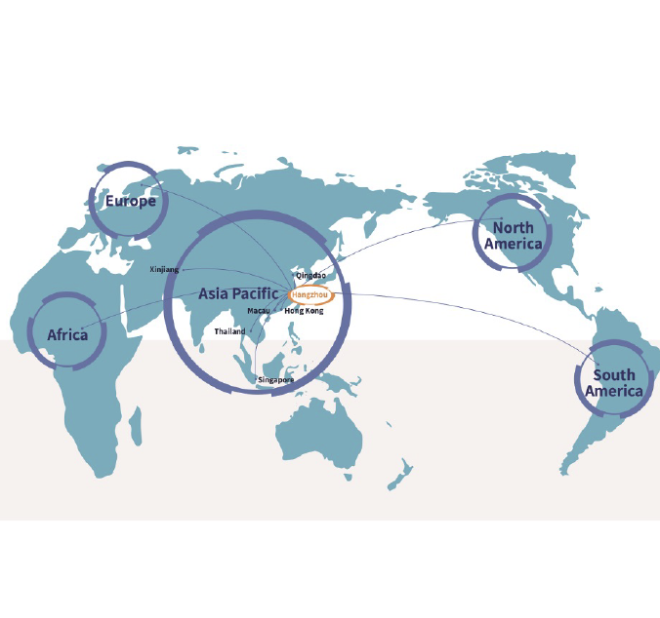
The story of bus hardware "going global" is unfolding
"We are a bank in Thailand, and we want to reform buses so that people can use their phones to pay for travel, just like in China. Do you have such equipment?" This month, this is the third overseas request email received by Zhang Danyan, the founder of Hangzhou Golong Technology.
This would have been impossible three to five years ago. Overseas production of bus equipment was dominated by European and American manufacturers, and Chinese companies were not qualified to attend the bidding conferences. But now, foreign transportation operators are coming to them for a simple reason: when it comes to using mobile phones to scan and pay for bus travel, Chinese people have the most experience.In the past three years, the integration of mobile internet into public transportation in China has brought an unprecedented boom.
Overseas customers learning about Chinese bus equipment .Zhang Danyan was the first to grasp the opportunity. "Mobile payment for buses involves hardware transformation. BAT (Baidu, Alibaba, Tencent) excel in software and won't work alone on hardware; they need partners." Her company, Golong Technology, positioned itself to produce mobile payment equipment for buses.
Reflecting on her entrepreneurial journey in recent years, Zhang Danyan is deeply moved as she witnesses a "frozen" industry slowly being unraveled. "In the past two years, domestic sales of bus equipment have almost matched the total production of the previous seven or eight years," Zhang Danyan told Zinc Finance.
With the wave of internet integration in buses, Golong Technology has sold products to over 170 cities nationwide, securing orders for more than 100,000 bus devices, becoming a microcosm of "Made in China" going global.
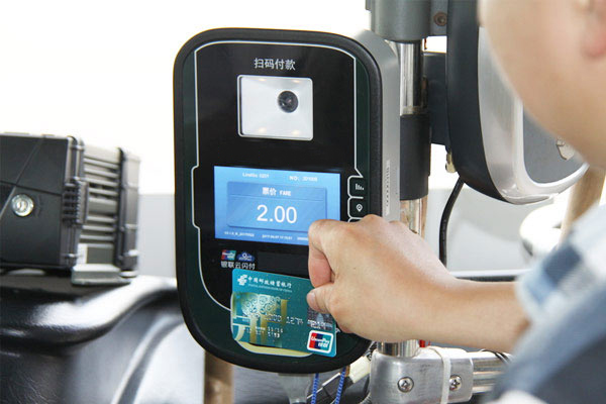
Hangzhou bus
Coin Dilemma
8,000 buses receive about 1.7 million yuan in coins daily, requiring 200 people to count. This results in tons of coins.
The warehouse is full, banks refuse to accept them, and suppliers have to be paid in coins. It takes a pickup truck to carry tens of thousands of yuan in coins...
This was the problem faced by Hangzhou Public Transport Group before 2017, a dilemma similar to many cities.The "coin + card" model has sustained bus fare collection for 20-30 years.
According to the Ministry of Transport, about 250 million people choose public transportation daily, with an annual ridership exceeding 90 billion nationwide. Despite these large numbers, the most traditional method of fare collection is still used.
Cashiers counting coins, numerous recharge points, untimely revenue data, and the inability to verify real-time financial data have always plagued the bus industry. Moreover, with the expansion of mobile payment services, carrying coins and bus cards is becoming increasingly inconvenient for modern people.
Under these pain points, applying mobile payment technology to public transportation has become the industry's trend. Various payment methods such as UnionPay QuickPass, QR code payments, transit cards, Apple Pay, and NFC are accompanying the intelligent upgrade of buses.UnionPay is entering the transportation e-payment gateway, Alipay has launched electronic bus cards, and Tencent has introduced ride codes, making the payment scene for public transportation a battleground everyone wants a piece of.
However, while competition is fierce in software technology, there are few players in hardware, leading to a brief period of stagnation.
"Use mine, not foreign ones." At the end of 2015, Zhang Danyan persuaded Alipay to collaborate with her. By then, her team had developed several bus devices supporting mobile payment, which she brought to Hangzhou Public Transport for a demonstration, coincidentally meeting Alipay's business team.At that time, Alipay had developed the "dual offline QR code" payment technology, allowing passengers to scan and pay even if neither the bus nor the passenger's phone has internet.
"This technology is crucial," Zhang Danyan told Zinc Finance. "Previously, one side had to be online, and scanning took at least 1 second, longer with poor internet. This would make boarding too slow for bus companies to accept."
However, despite having the technology, Alipay hadn't solved the equipment issue. "An overseas machine cost over 1,000 pounds," and Alipay was considering overseas procurement, with time zone differences, communication, and costs posing challenges.
Zhang Danyan saw her chance.
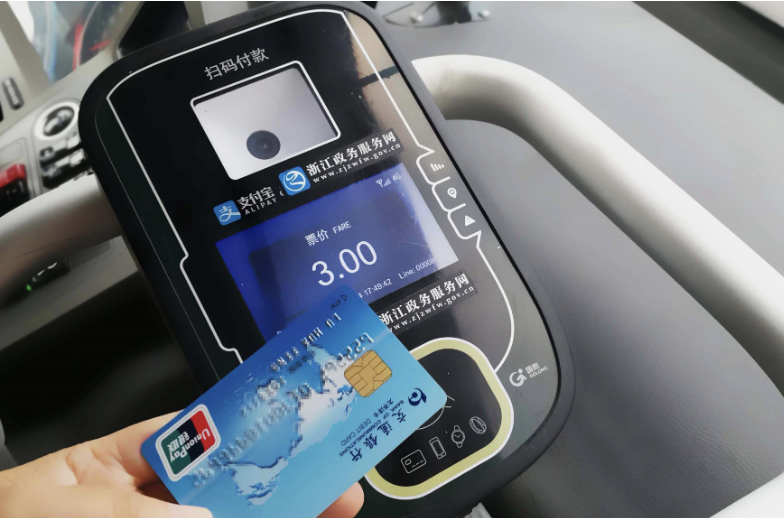
The First Bus
"I told Alipay, don't go for cross-border procurement, I can handle this."
Confident, or just boasting?
In 2015, as the "year of mobile payments" began, more and more offline scenarios started supporting Alipay and WeChat payments, but paying by phone on buses was still out of reach for many. Zhang Danyan began to think, what if a bus had a POS machine supporting mobile payment?
But bus scanners are different from ordinary POS machines; they must withstand extreme temperatures and voltage fluctuations. Ensuring successful payment is only the first step. From scanning to hearing the "ding" must be within 0.3 seconds, consistent with the standards set by the Ministry of Housing and Urban-Rural Development and the Ministry of Transport, or it would mean slow boarding and poor experience.Alipay's "dual offline" technology convinced Zhang Danyan that this could work.
The essence of dual offline is separating "recording" and "payment" actions. If there's no network, the app "records" first and deducts the payment when the network is restored. Even with signal interruption, payment can be completed.
Based on this, in early 2016, Alipay and Golong's team started lab confinement. They continuously adjusted the height, position, and lighting of the equipment, repeatedly testing payment success rates, payment times, and voice prompts... This seclusion lasted three months.
On one side was Alipay's robust technology undergoing continuous validation; on the other was Zhang Danyan's team with over a decade of experience in the bus industry, adding value to the development.
The team testing bus mobile payments
A bus trainer, a small team of fewer than 10, and the latest research results covered every corner of Hangzhou, looking for areas with the worst signals, such as tunnels, testing over 50 times to verify if the product could support user boarding.
In September 2016, with the G20 Summit in Hangzhou, the first bus supporting QR code boarding was on the road in August, making it the first globally!
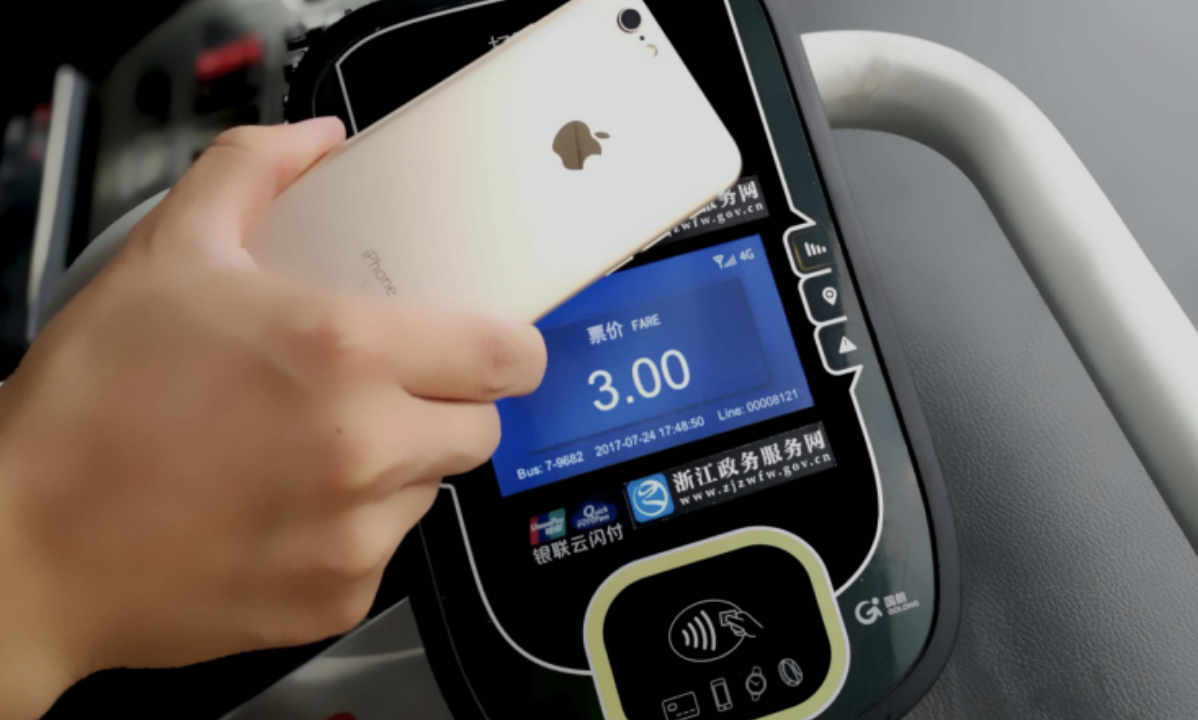
The team testing bus mobile payments
After achieving a breakthrough, they face more challenges.
The opening of the first QR code bus line created a massive market response, and Zhang Danyan finally secured her first significant order: replacing over 8,000 scanning devices for Hangzhou's entire bus fleet.
For Zhang Danyan, this order was more like a "big gamble." "I urgently needed downstream suppliers to start production, but the upstream order payment hadn't arrived, putting financial pressure on me. Halting production would significantly delay the city's bus service rollout." Zhang Danyan took a bold step, mortgaging her property and borrowing over 5 million yuan from the bank.Though hurried, she was always anxious.
"When we rolled out citywide, we were still apprehensive," Zhang Danyan told Zinc Finance. "Typically, we cautiously roll out products, from 70-80 units to 100-200, step by step, with numerous validation phases."
Despite extensive simulations in the lab, the unknowns of handling massive passenger flows during rush hours and frequent data operations remained.Fortunately, over 8,000 buses' QR code boarding service launched on time, and Zhang Danyan's worst fears did not materialize.
Imagination
The day after the Hangzhou launch, a call from Deqing came in. "We want to be the first county-level bus system to implement mobile payment." Golong Technology completed the technology replication, installation, and rollout in a week.
In March 2018, Golong's city bus customers numbered 50. By the end of the year, their QR code payment devices had entered bus companies in 120 cities nationwide, thanks to deeper collaboration with Alipay.
Golong's all-in-one bus payment machine
"The changes in the past two years have condensed nearly a decade," Zhang Danyan said. Nationally, there are about 600-700 thousand buses, with equipment lasting 5-8 years. The annual production of bus card machines used to be around 100,000 units, but mobile payments have tripled this number. Despite this market explosion, there are only about ten professional bus equipment manufacturers in China.
According to the "National New Urbanization Plan," by 2020, public transportation should account for over 60% of motorized trips in cities with populations over one million. Zinc Finance reports that about 800 county and city bus companies nationwide are awaiting technology upgrades.Meanwhile, the story of bus hardware "going global" is unfolding.
According to Hengda Research Institute, China's mobile payment scale was 202.93 trillion yuan in 2017, ranking first globally, a hundred times the scale of U.S. mobile payments, with domestic electronic payment penetration approaching 80%.This lays the foundation for the mobile payment-related industry's global expansion.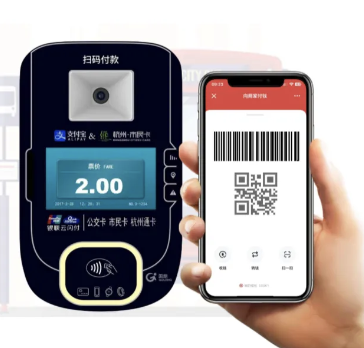
These are the opportunities , Everything is just beginning.
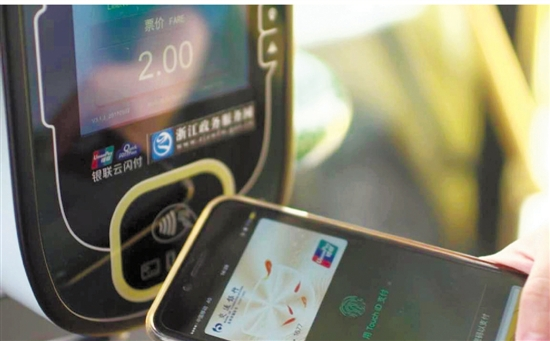
Hangzhou, as a pioneer of smart transportation, has taken the lead in using mobile payment in buses since May this year. The public will discover that there is a POS machine when they take a bus. Installing Golong POS machines in buses can offers the public multiple ways of payment, for instance, scanning QR code of Alipay, UnionPay, and other ways of payment in smartphones, and the smart wears. Hangzhou is the first city in China that achieves mobile payment in buses. All bus lines of Hangzhou Public Transport Group and more than 8000 buses have been fully supported by UnionPay Mobile QuickPass and Alipay, which cover the main urban area, Xiasha, Xiaoshan, Yuhang, and Dajiang East.
Bus Mobile Payment
Betting Big
Vehicle-mounted POS machines in buses use mobile payment system, quickly decoding QR codes, and uploading and saving data. Recognizing a QR code only needs 0.3 seconds, which hugely increases the efficiency of payment.
*Vehicle-mounted POS machines for scanning QR codes is to provide convenient public transportation payment services for users on the basis of urban public transportation mobile payment of smartphones and GNSS vehicle positioning. It provides not only convenient payment for users but also value-added services for bus operation managers, such as real-time settlement of bus fare systems, big data analysis of passenger flow, and technical support for vehicle dispatching and operation management.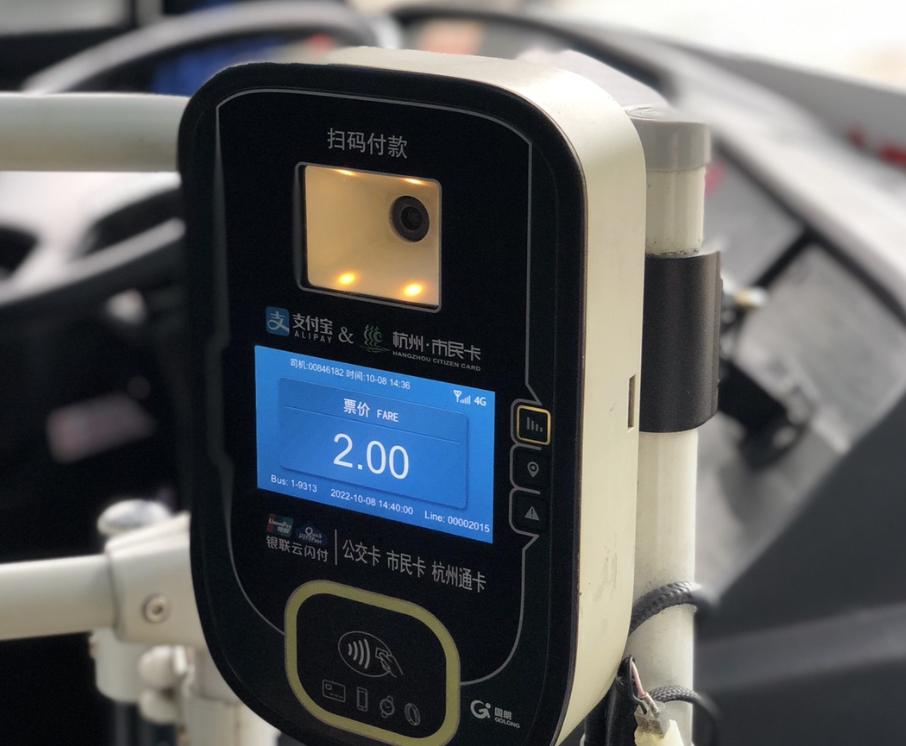
Taking the bus is traditional public transportation as a part of the offline scenario. The age of the users is relatively mature. The user base is large, and the frequency of consumption is high. Passengers face the problems of getting and making change, and recharging. Mobile payment can provide passengers with great convenience. Therefore, mobile payment has loyal users and stable user base. The payment as a gateway of our whole system, which can quickly attract passengers to other functions and sections in the platform, quickly promote other related businesses and guide users.
Mobile payment, such as UnionPay and Alipay, makes the public feel convenient and efficient. Currently, Hangzhou has realized mobile payment for subway, bus, and high-speed railway travel, which greatly facilitates the travel of tourists and local citizens.
After the G20 Hangzhou Summit, Hangzhou’s image as an international tourism city has become more prominent, becoming a new business card for China’s international exchanges. Golong Technology will help Hangzhou construct smart city model, making Hangzhou a real mobile payment city.